
I spent four days riding the far-northeastern mountains of Vietnam on the Cao Bang Loop, arriving in early September when the rainy season hadn’t quite let go. Most people wait until late September for dry skies, but I ended up starting a little earlier without really meaning to. That meant sudden heavy showers, a few muddy sections, and some sights I had to skip.
Yet those detours turned into reasons to linger—quiet hours with local families and long conversations about how the weather shapes life here. With fewer travelers on the road, the loop felt open and unhurried, giving me time to slow down and notice the small things.
This guide grew out of that trip and my love for slow travel, blending the plans I made with the surprises I found along the way. I’ve pulled together the routes, costs, and small lessons from my ride to help you plan your own journey with a little less guesswork.

What is the Cao Bang Loop?
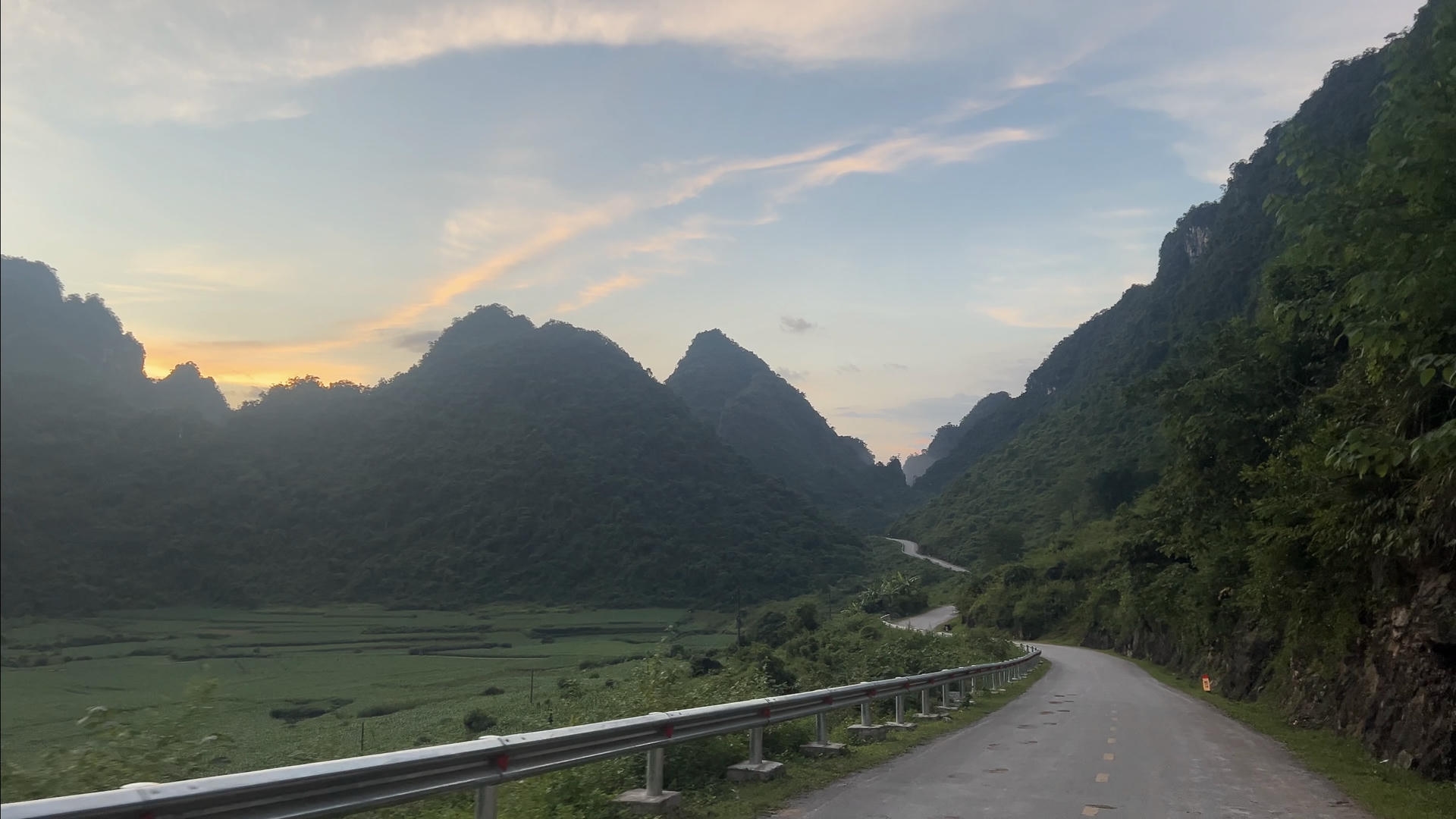
The Cao Bang Loop is a circular motorbike route that begins and ends in Cao Bằng City and winds through some of Vietnam’s most remote mountains in the far northeast. Over three to five days you’ll cover roughly 300 kilometers of dramatic karst peaks, jade-colored rivers, and quiet ethnic minority villages that feel a world away from the big city.
Most of the ride passes through the Non Nuoc Cao Bang UNESCO Global Geopark, a landscape shaped by more than 500 million years of geological change. Limestone cliffs, hidden caves, and underground rivers tell the story of deep time, while 8 ethnic communities keep long-standing traditions alive. With more than 200 recognized historical sites, Cao Bằng also plays an important role in Vietnam’s revolutionary history.
Think of it as Ha Giang loop’s laid-back cousin—just as jaw-dropping, but with far fewer crowds. Even in its busiest months the loop stays calm and off the usual tourist radar. That quiet is what drew me here, and it’s what makes the ride something I can’t help but share.
How to get to Cao Bang
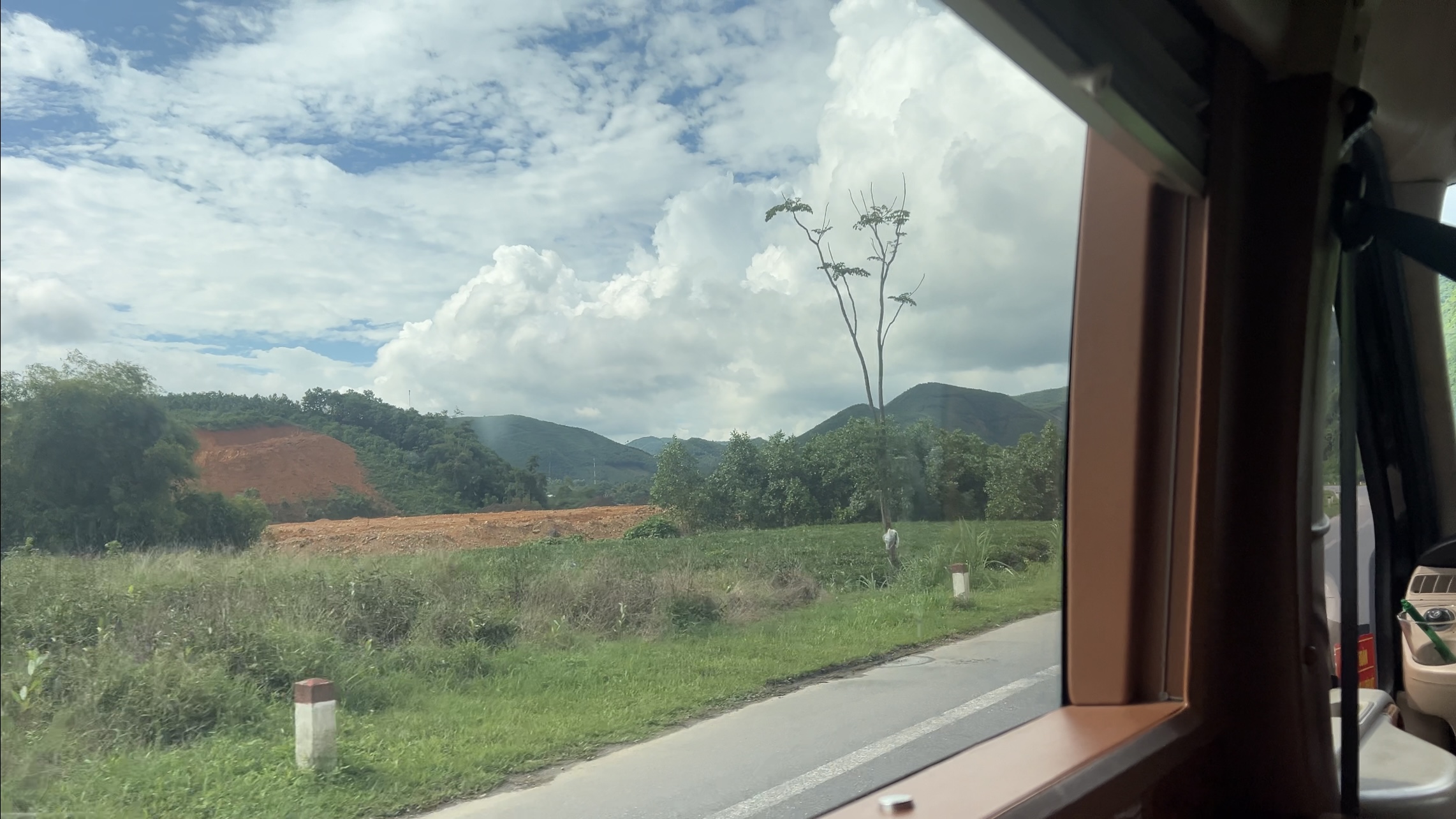
Cao Bang sits in Vietnam’s far northeast, right along the border with China. It’s about 280 kilometers north of Hanoi, a distance that feels much longer once you leave the highways and climb through limestone valleys toward Cao Bang City, the starting point for the loop. You have a few easy options to get there.
The most convenient way to reach Cao Bang City is by bus, and you have 2 good options: a sleeper bus for an overnight ride or a daytime limousine-style van for extra comfort.
Sleeper bus: Companies such as Thanh Ly and Hiep Giang run night departures around 8 or 9 PM from Mỹ Đình Bus Station. A single berth costs about 400,000 VND, while a double cabin is around 750,000 VND. The trip takes roughly seven to eight hours, and you’ll arrive early enough to start the loop the next morning.
Limousine van: If you prefer to travel during the day, limousine vans provide wider seats and a smoother ride. The earliest departures leave around 6:00 am, and some services can pick you up at Noi Bai Airport for a small extra fee of about 20,000 VND. The base fare is around 450,000 VND, and most companies will drop you off right at your accommodation in Cao Bang City, which makes the trip even easier. After trying a few companies, I recommend Thuan An Limousine for its comfortable seats and consistently good service.
From Ha Giang
Cao Bang borders Ha Giang, so it’s easy to ride both loops on the same trip. Many organized tours already combine them, but if you’re planning your own journey you can either take a bus for a simple transfer or ride a motorbike to experience Khau Coc Cha Pass, a mountain road with fourteen sharp switchbacks that makes the trip feel like a true adventure.
From other provinces
You can reach Cao Bang from other northern provinces by bus or private car. If you’re coming from farther south, the simplest route is to fly or take a train to Hanoi first, then start your journey from there.
Getting around Cao Bang
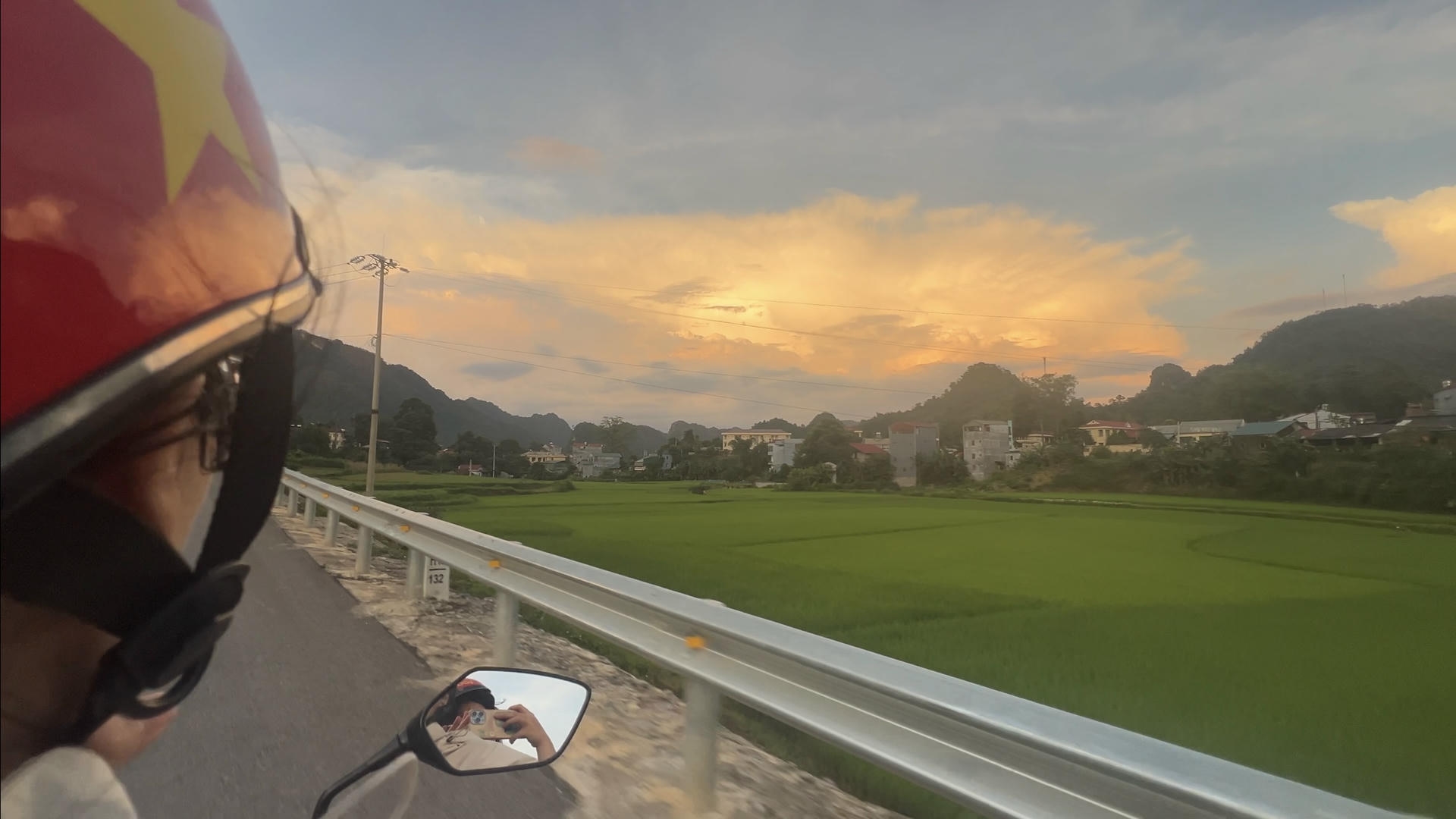
The Cao Bang Loop is best experienced on a motorbike, and it’s the choice that gives you the most freedom to pull over for photos or wander into a tiny village when something catches your eye. The roads are mostly smooth but you’ll ride mountain passes and plenty of curves, so start early and avoid driving after dark.
Renting a bike
I rented my bike in Cao Bang City and was glad I arrived half a day early to check it over. Give yourself time to test the brakes, lights, and fuel gauge, take a few photos of the bike’s condition, and keep the rental shop’s number handy. Daily rates run about 180,000–250,000 VND, and I spent roughly 100,000 VND a day on fuel. You can also ask about short-term motorbike insurance if you’d like extra peace of mind.
An international driving permit (IDP) is technically required to ride legally in Vietnam, and while many travelers get by with a home-country license, having an IDP keeps you covered if you’re stopped or need to make an insurance claim.
For a reliable rental, I recommend Cao Bang Eco Travel. They rent well-maintained bikes and manage Cao Bang Eco Homestay, which offers luggage storage, free Wi-Fi, and basic repair tools. If you book a tour or rent a bike through them, you can even use a free dorm bed between 3 AM and 8 AM, perfect if you arrive early and need a quick rest before starting the loop.
If you’d rather not plan every detail, guided tours are available for one to four days. You can ride your own bike or sit back with an easy rider while a local guide shares stories and insights you might miss on your own. Going solo lets you linger in the scenery, but a guide can add a deeper understanding of the landscapes and history along the way.
Best time to visit Cao Bang
Cao Bằng is beautiful year-round, but each season offers a different feel for the loop.
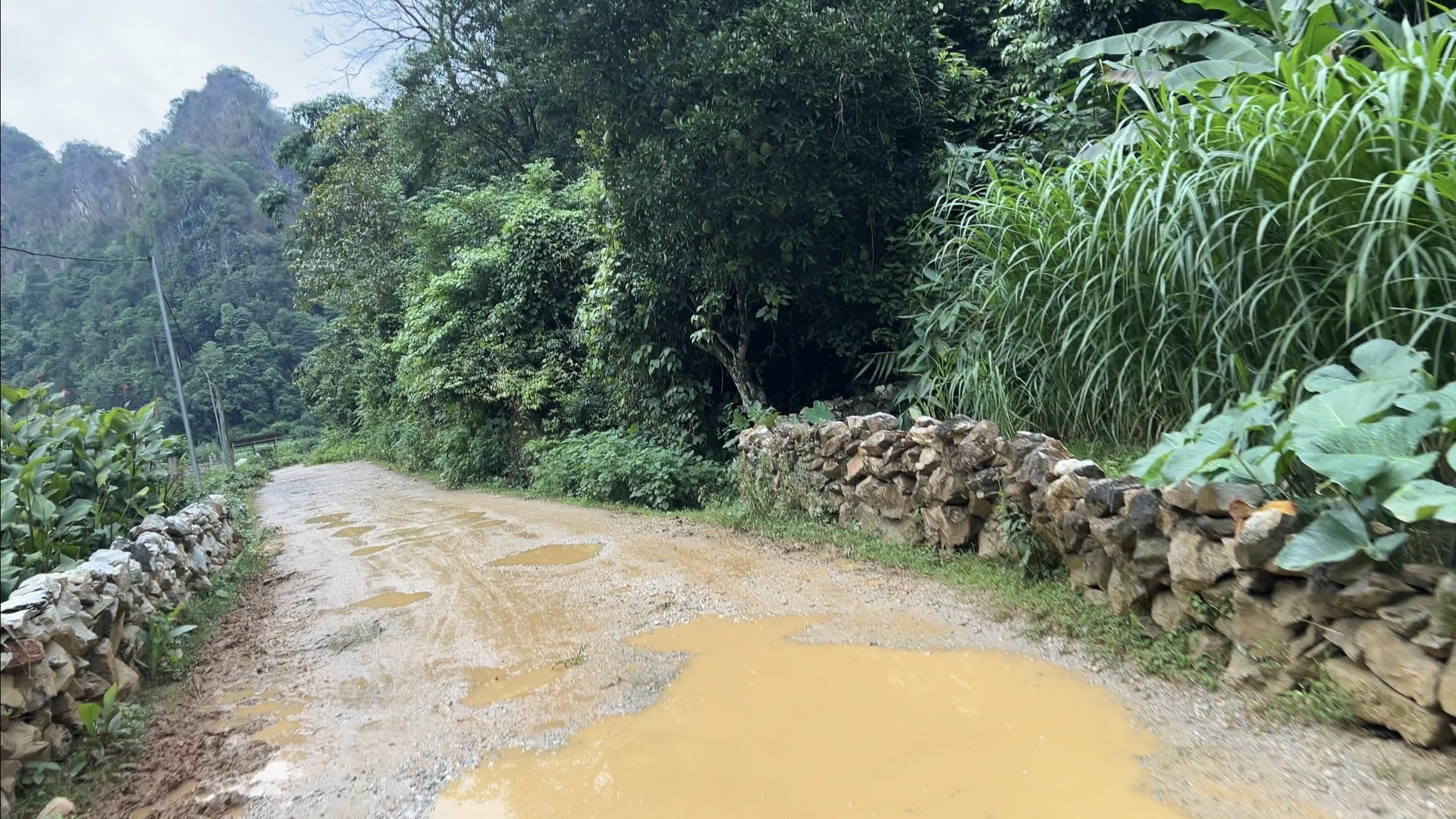
May to September is the rainy season when the mountains glow a deep, lush green and Bản Giốc Waterfall is at its most powerful. August and September are especially striking as the terraced rice fields turn golden while the falls still surge with clear water. Heavy rain can make roads slippery, so ride carefully and allow extra time on mountain passes.
October to March is cooler and dry, making for easier riding and bright, clear skies. October is a sweet spot if you want both the rice harvest and a strong waterfall. November and December add wild sunflowers and buckwheat blossoms, while March is known for white pear flowers. Winter mornings and evenings can dip to around 15–16 °C, so pack a warm layer.
My 4-day Cao Bang loop itinerary
This is the exact route I rode for four days, and it delivered every twist, climb, and wow-moment I hoped for. I pieced it together with a mix of local tips and on-the-road improvising, and sure—I hit a few bumps like surprise showers and a wrong turn or two. But that’s part of the fun, and now you get the version that actually works.
Plan to start each day before 9 AM. Early rides mean cooler air, quieter roads, and plenty of time to reach each stop before dark, with room for those “let’s pull over for a photo” moments that make the loop so good. Follow this plan and you’ll see the best of the Cao Bang Loop without feeling rushed.
Day 0
Arrival in Cao Bang City
I arrived in Cao Bang City a day early, and it turned out to be one of the best decisions of the trip. Most sleeper buses will drop you right at your accommodation, so it’s easy to settle in and get your bearings before starting the loop.
The city is small and walkable, with plenty of options from budget dorms to comfortable hotels. This time I stayed at Cá Homestay, a relaxed and affordable spot with clean rooms and a welcoming vibe.
Spend the afternoon stretching your legs and sampling a few local dishes:
- Phở Vịt Quay – Roast Duck Noodle Soup
Try it at Phở Quyên (5 Hiến Giang). This northern-style phở features fragrant broth topped with slices of crispy-skinned roast duck and fresh herbs.
- Phở Chua – Sour Rice Noodle Salad
Also at Phở Quyên, this dish mixes rice noodles with a sweet-and-sour sauce, pickled vegetables, peanuts, and sometimes slices of pork, creating a refreshing balance of flavors.
- Áp Chao – Crispy Fried Pork Belly
Head to Áp Chao Bà Hạc (124 Hiến Giang). Pork belly pieces are marinated, lightly battered, and deep-fried until golden and crunchy, then served with a tangy dipping sauce.
- Bánh Cuốn Cao Bang – Steamed Rice Rolls
At Bánh Cuốn Cô Lan on Xuân Trường Street, thin rice sheets are filled with minced pork and wood-ear mushrooms, topped with fried shallots and served with a warm pork bone broth instead of the usual fish sauce.
As night falls, stroll along Kim Đồng Walking Street for a sidewalk coffee and a bit of people-watching. Cao Bằng City goes quiet early, so enjoy the calm, get a good sleep, and be ready to start the loop at sunrise.
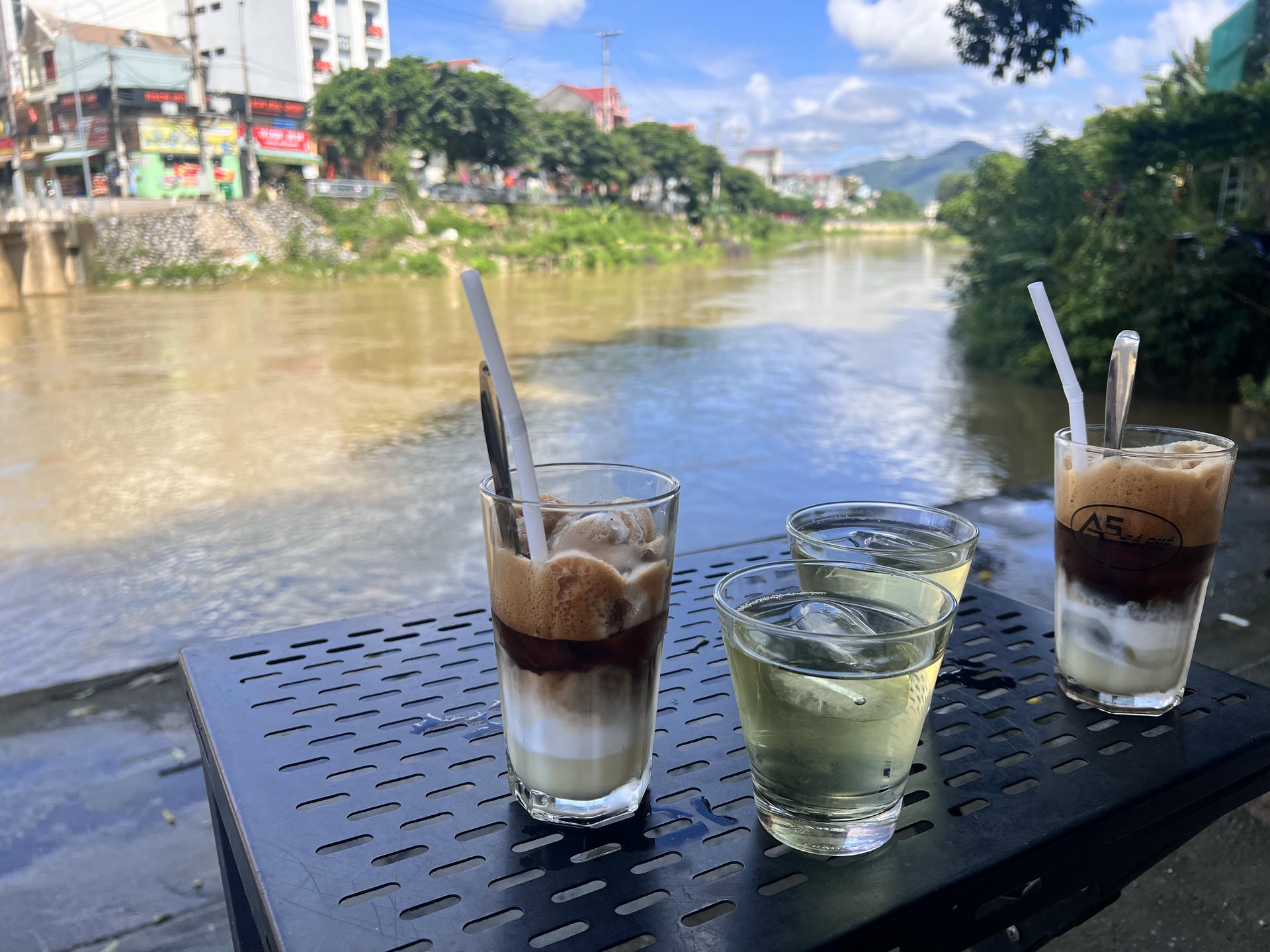
Start your morning with a hearty Cao Bằng breakfast. I chose bánh cuốn at Bánh Cuốn Cô Lan on Xuân Trường Street, a tiny spot locals love. If you need a caffeine kick, grab a quick coffee by the lake at A5 Café by the lake before you pack up and hit the road.
Because we were traveling independently, we carried our luggage on the bike. If you join a tour, most companies will hold your big bags and you only need a few essentials:
- 3–5 days of clothes
- Toiletries and a toothbrush
- A swimsuit for waterfall dips
- Sunscreen and sunglasses (daytime temps can reach 35–40 °C)
- Any personal medication
- A light waterproof jacket
- Camera and chargers
- Phone and charger
- Enough cash for fuel and drinks in case ATMs are scarce
Traditional Craft Villages
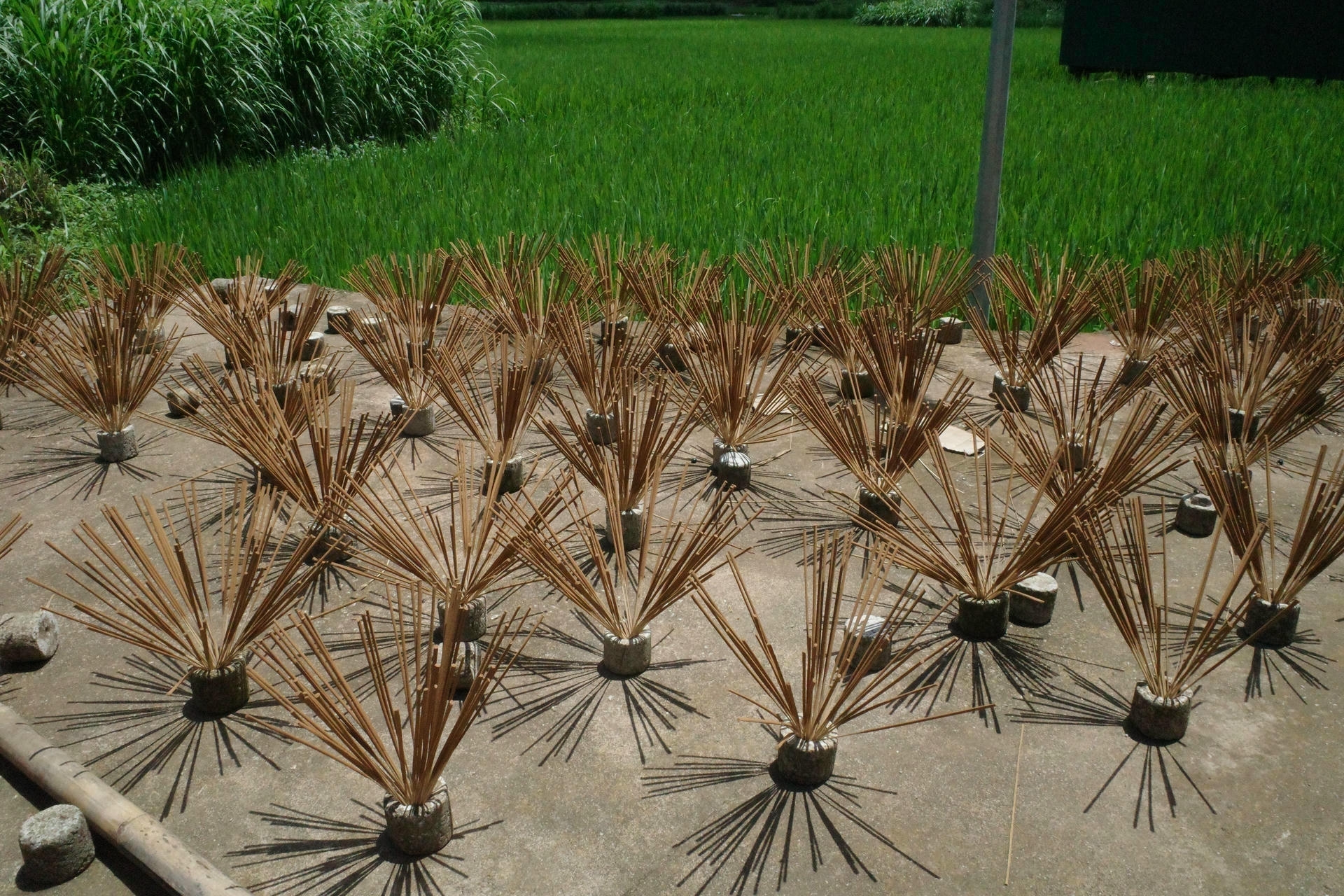
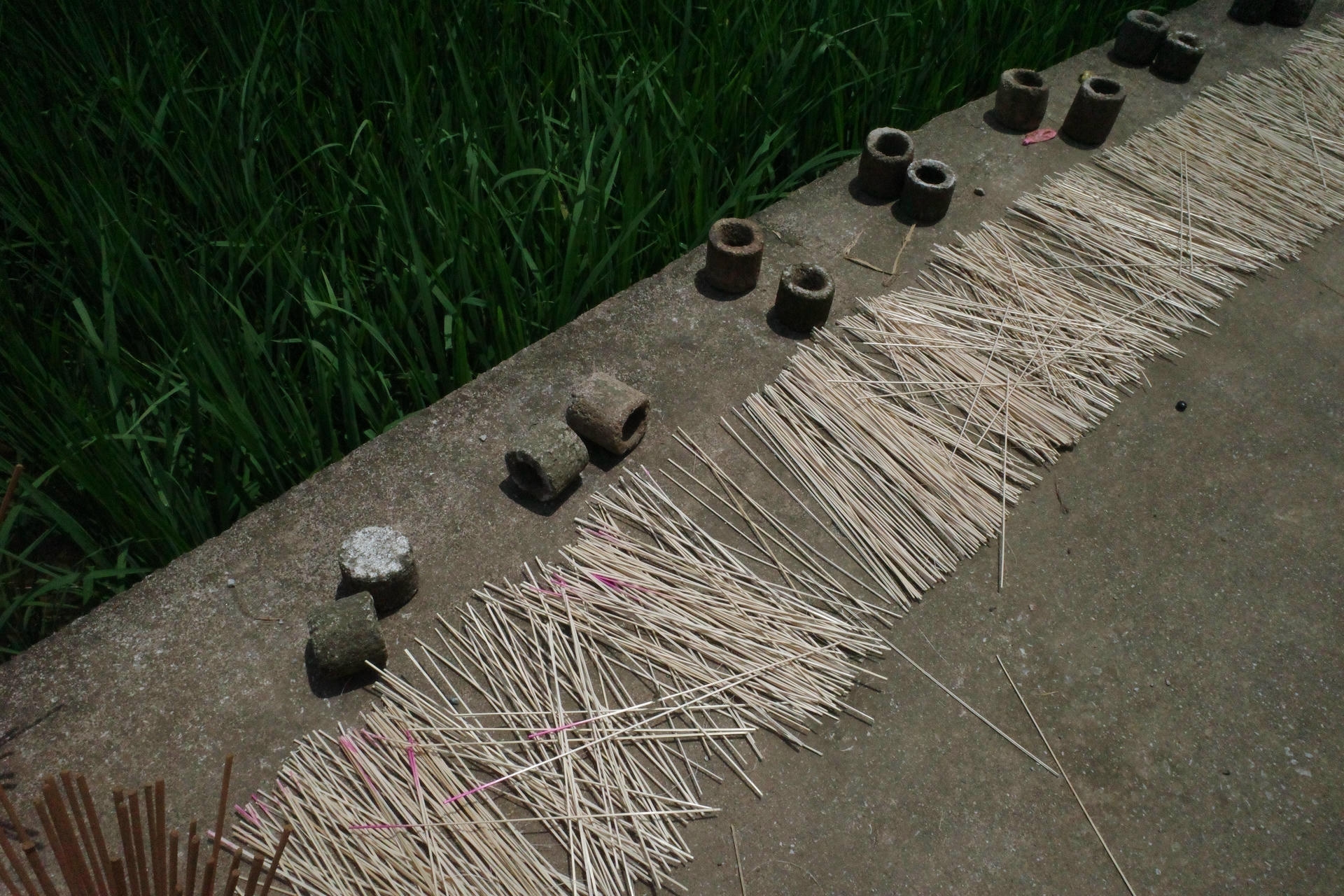
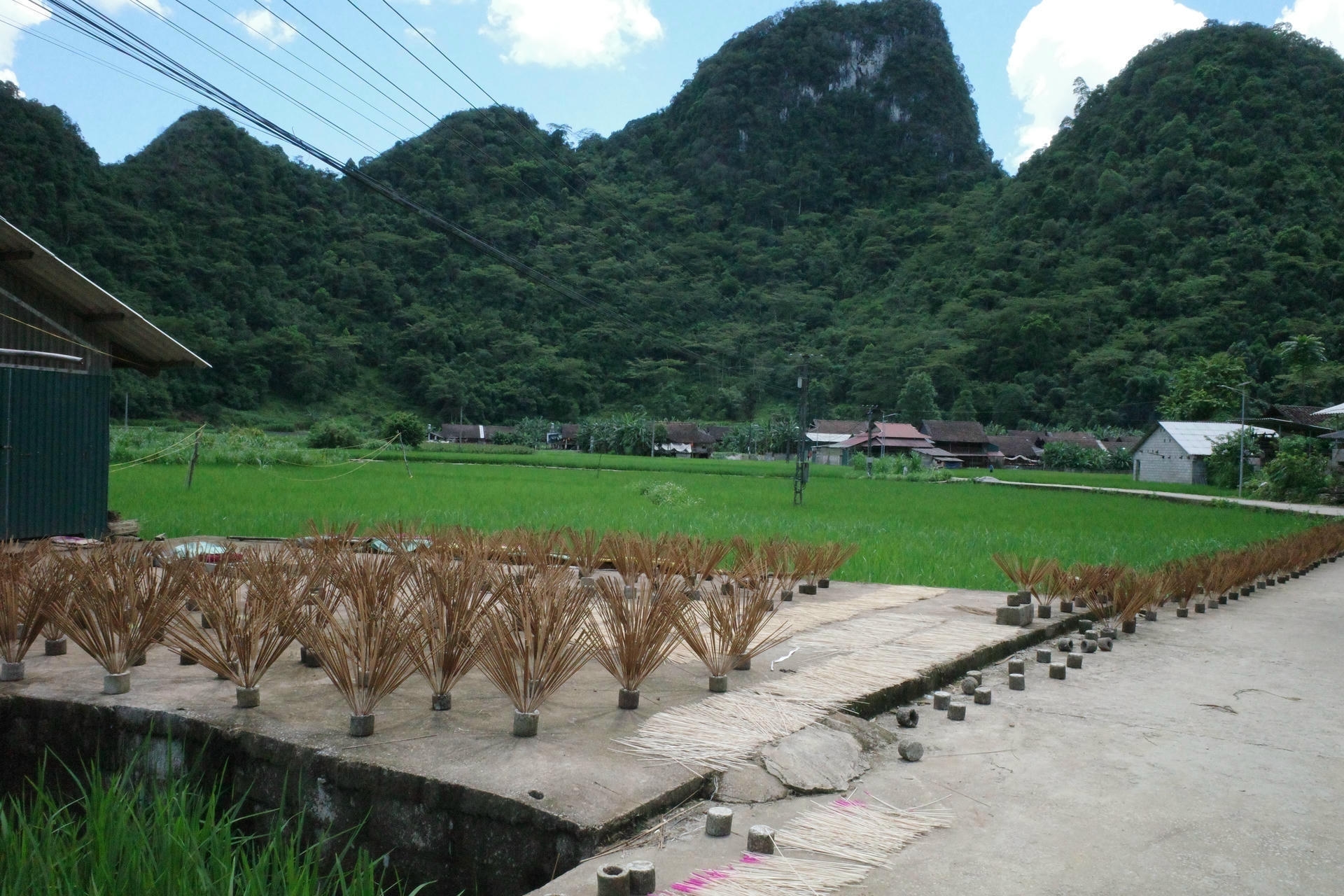
About 30 km from Cao Bang City you’ll reach a trio of traditional craft villages: Phia Thắp incense village, Dìa Trên paper-making village, and Phúc Sen blacksmith village. Each has its own charm, but Dìa Trên is the one that really stuck with me. This little Nùng An community has just 65 households, and 40 of them still practice the centuries-old art of making paper by hand.
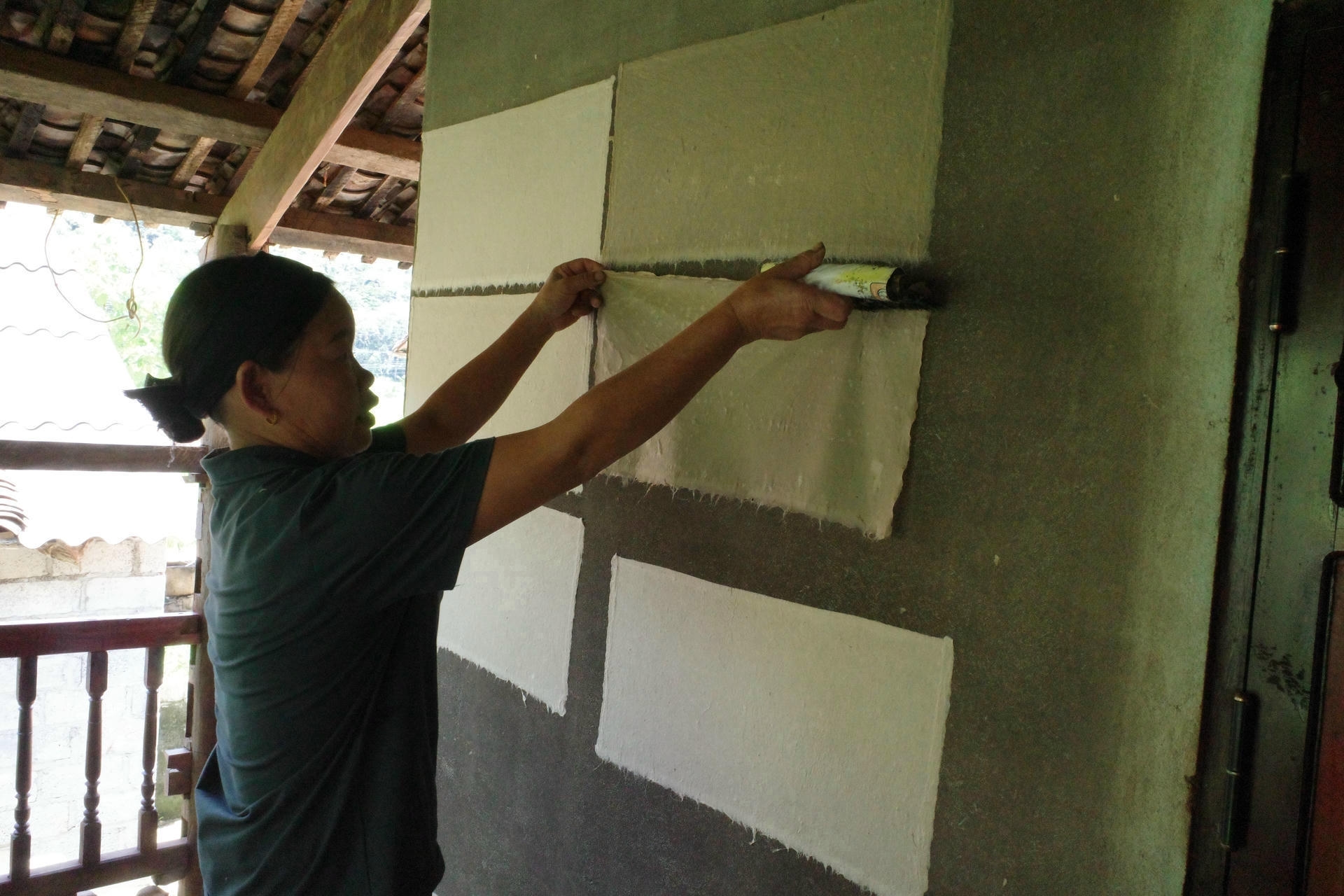
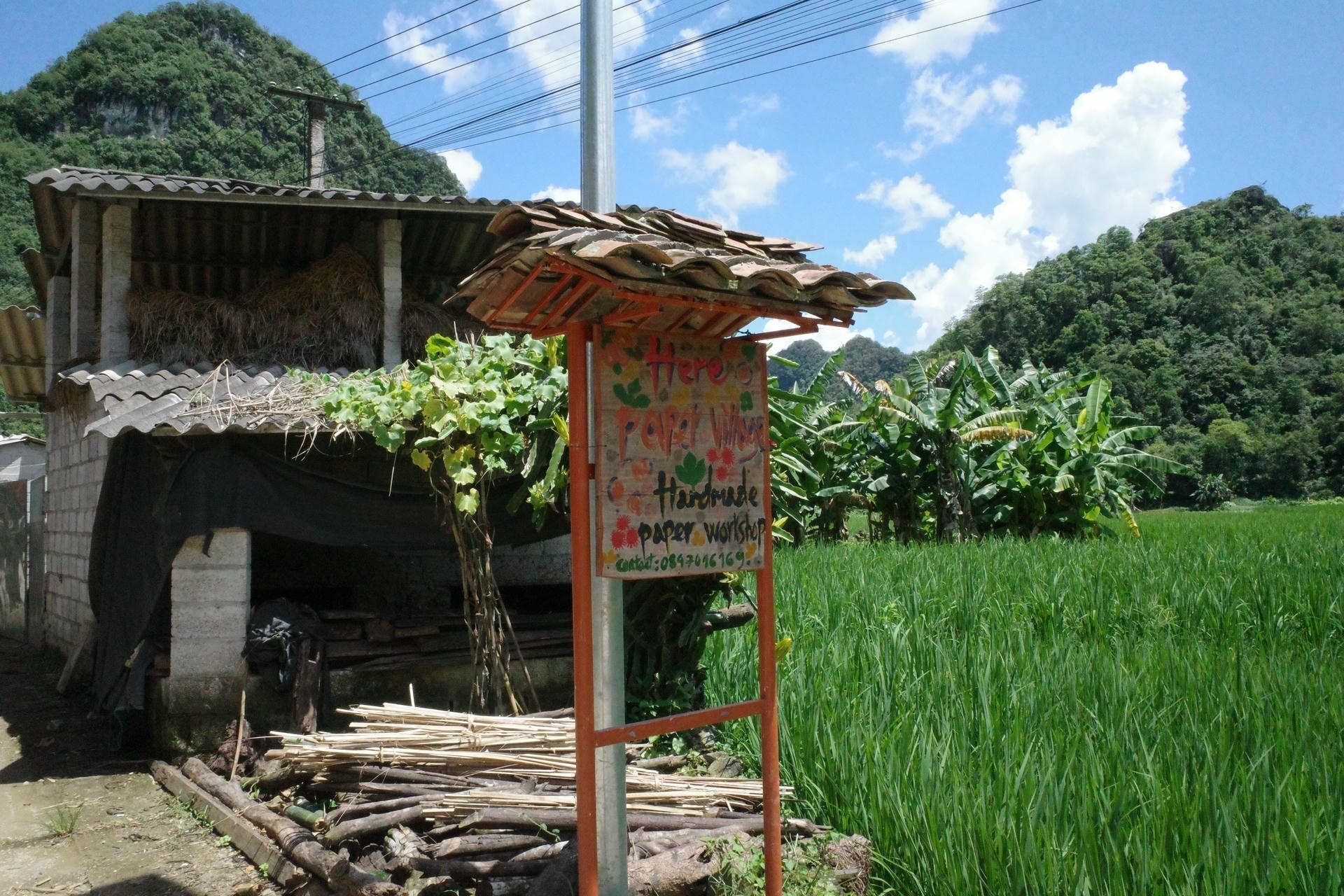
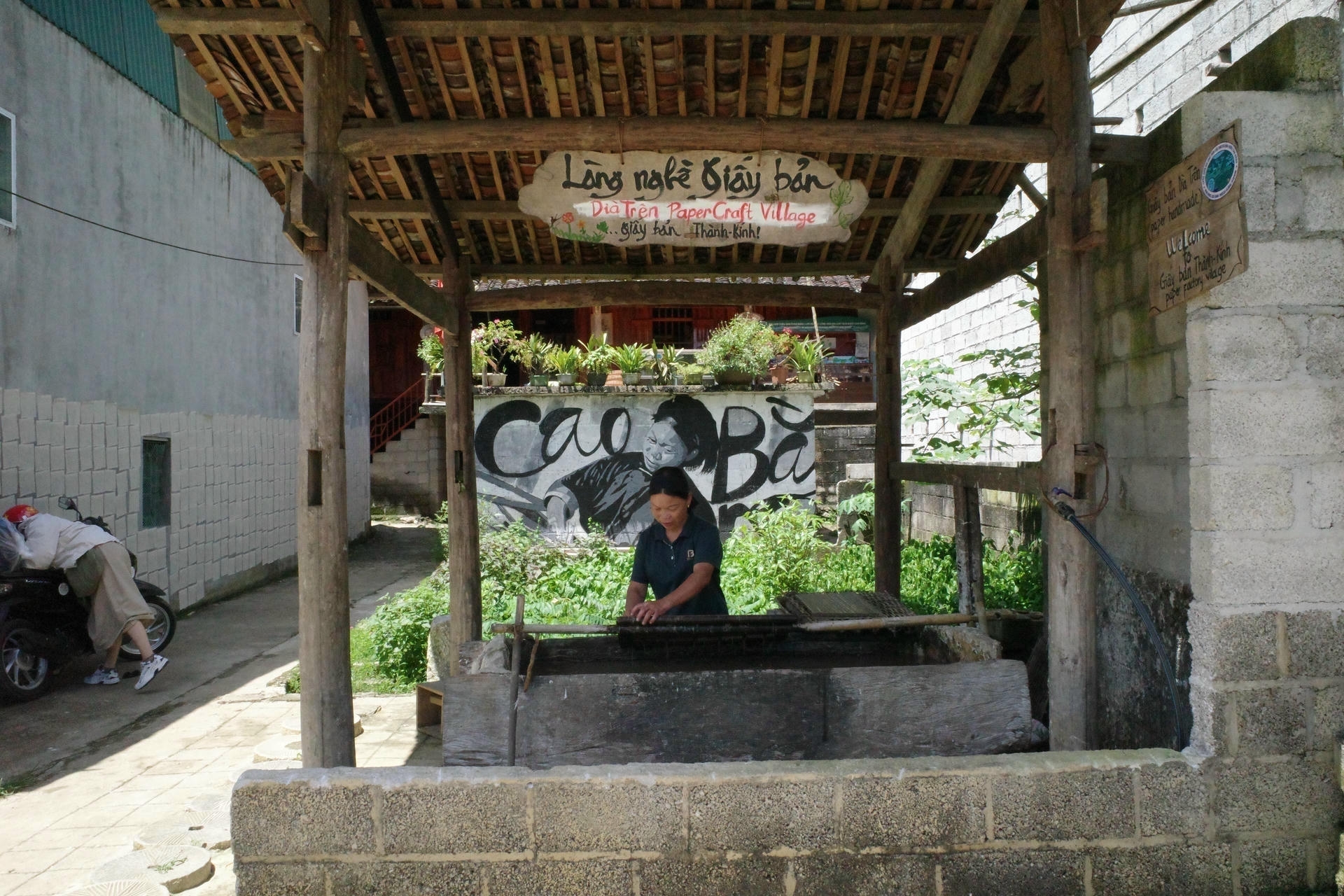
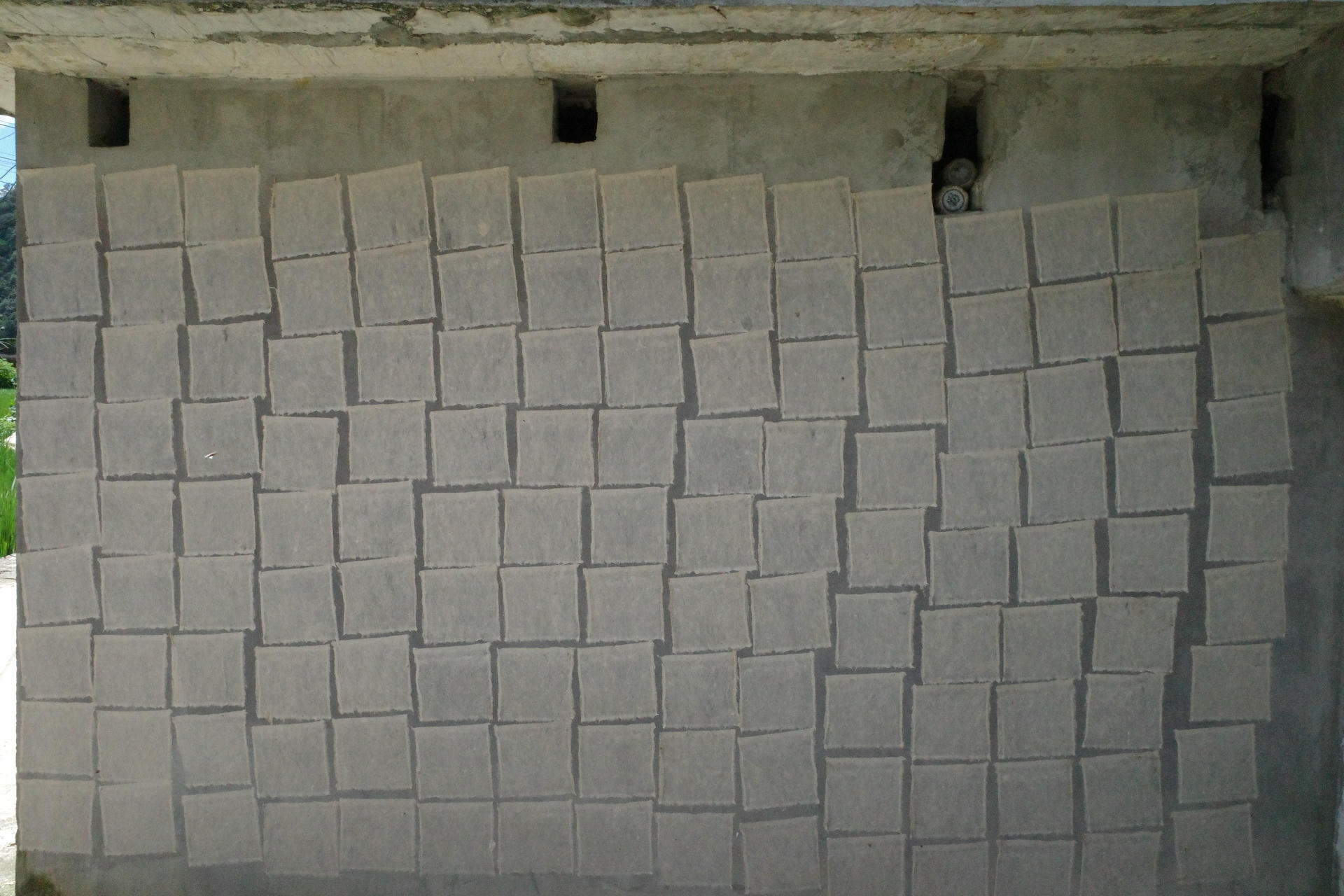
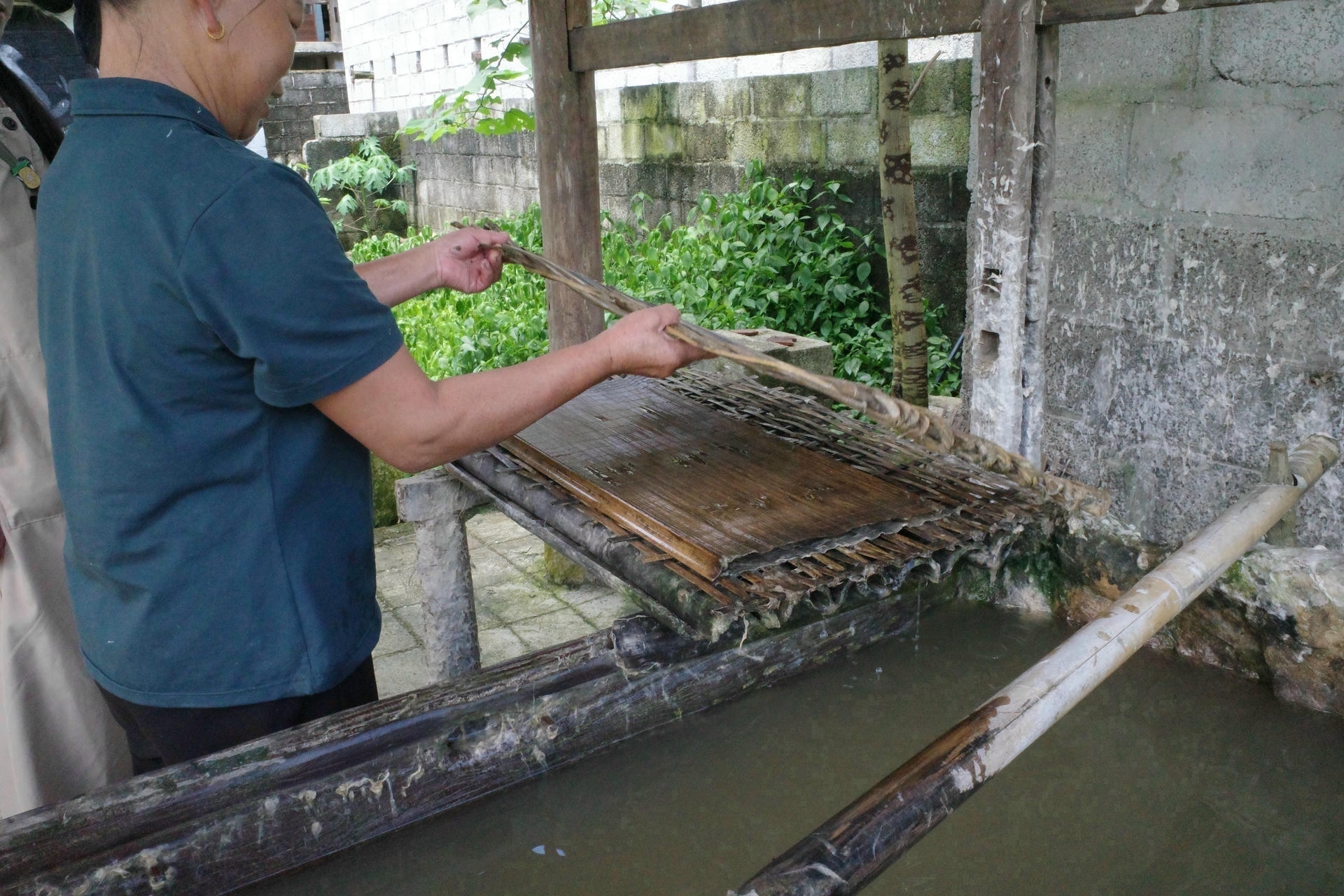
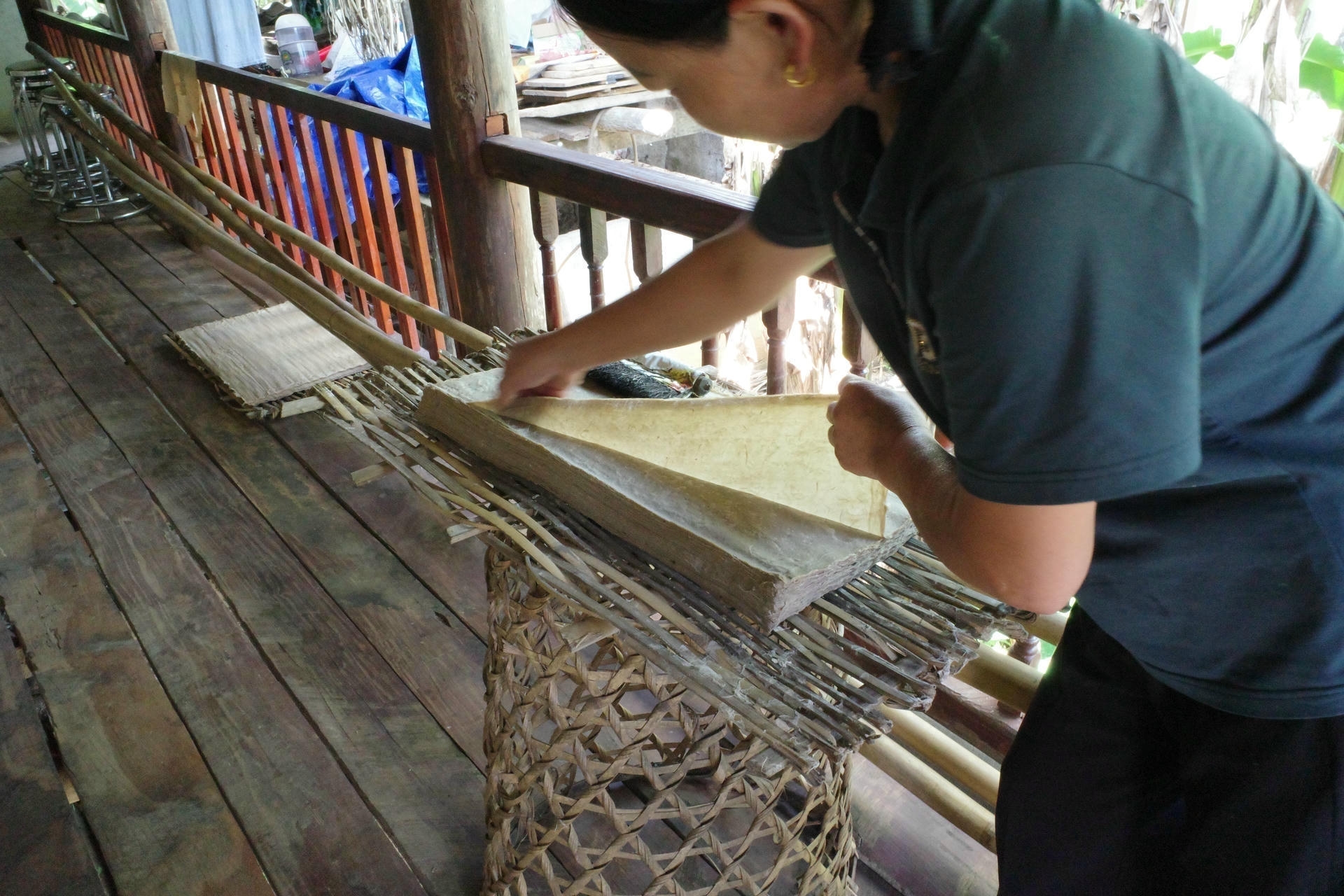
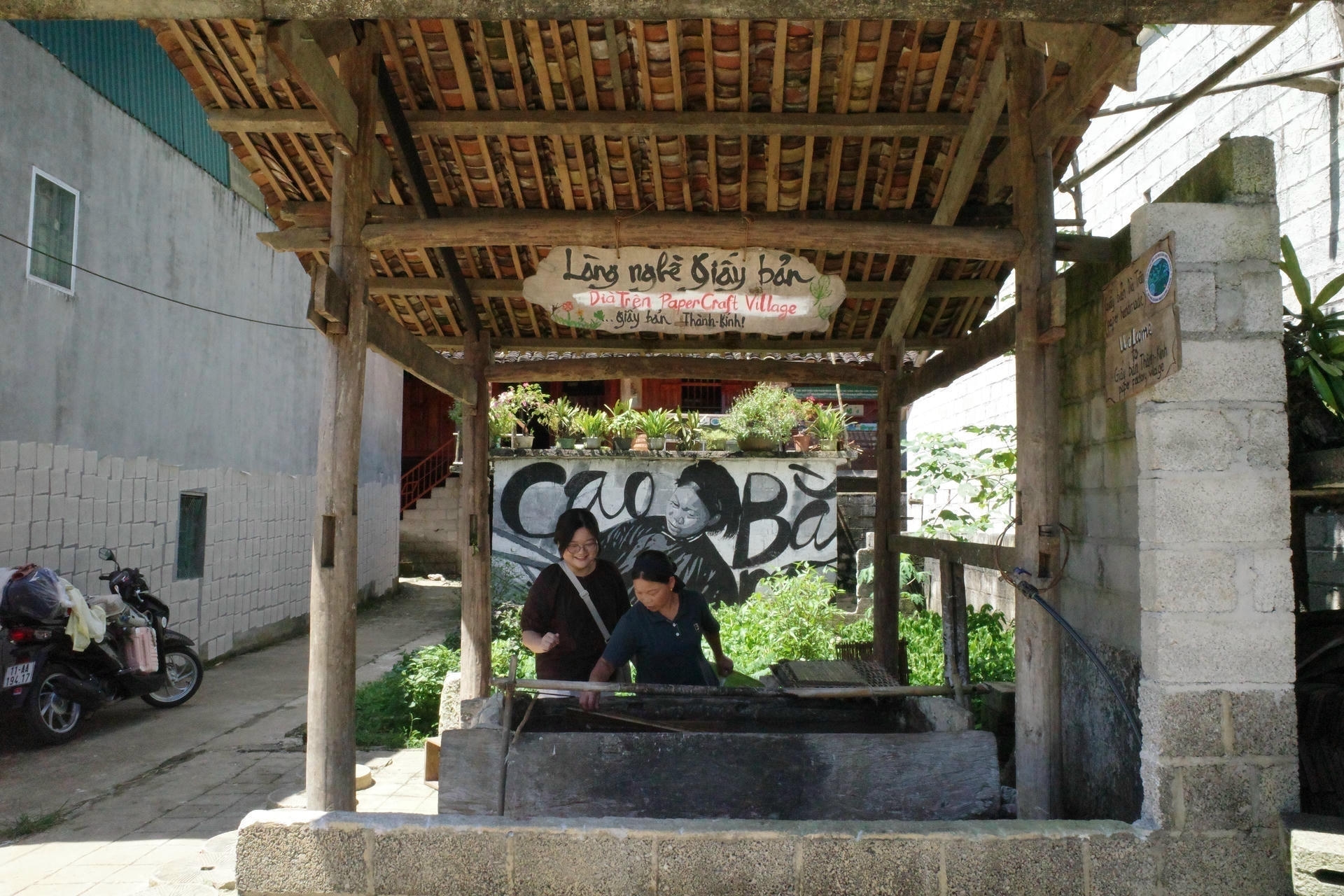
Join a paper-making workshop to watch every stage of the process and even try a few steps yourself. I joined a session at Thành Kính Paper House, easy to spot with a small sign and the work area set right beside the road. The workshop is free, but it’s thoughtful to buy a small souvenir—a notebook or a hand-pressed print for under 200,000 VND—to help support the craft and take a piece of this culture home.
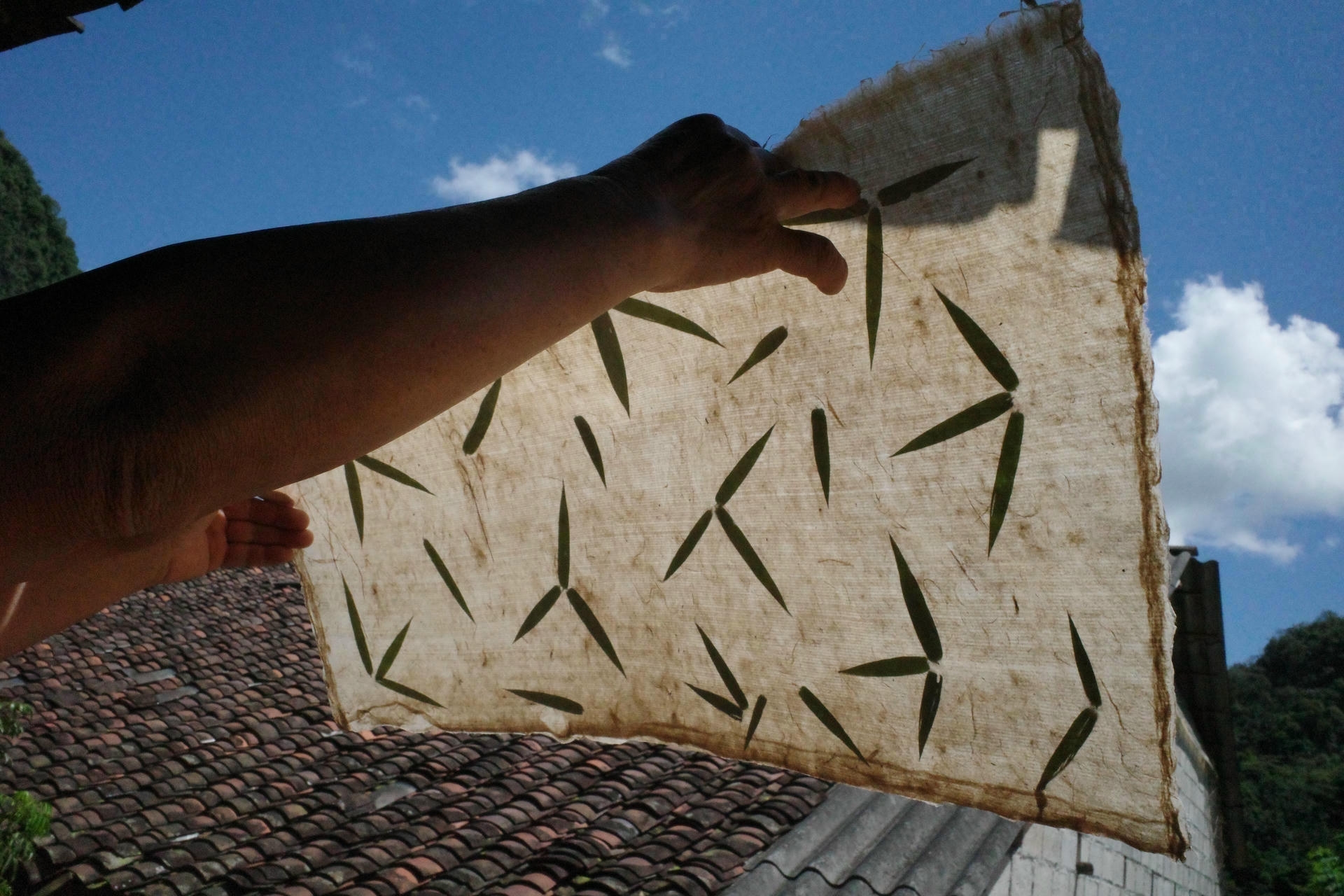
✴︎ While this spot is popular, it’s worth wandering to a few other households too, giving more families a chance to share their skills and keeping the tradition alive in everyday village life. My host also mentioned plans to open a homestay, so if you’re reading this a year from now you might even be able to spend the night here, soaking up the village’s quiet culture while supporting the people who carry this paper-making heritage forward.
To step a little deeper into this paper world, follow me to listen the paper talk.
Vinh Quý Grass Hill
Continue about 44 km to Vinh Quý Grass Hill, which feels like nature’s own balcony. Park your bike at the refreshment stall at the base and give yourself 15–20 minutes to hike the gentle but slightly steep trail.
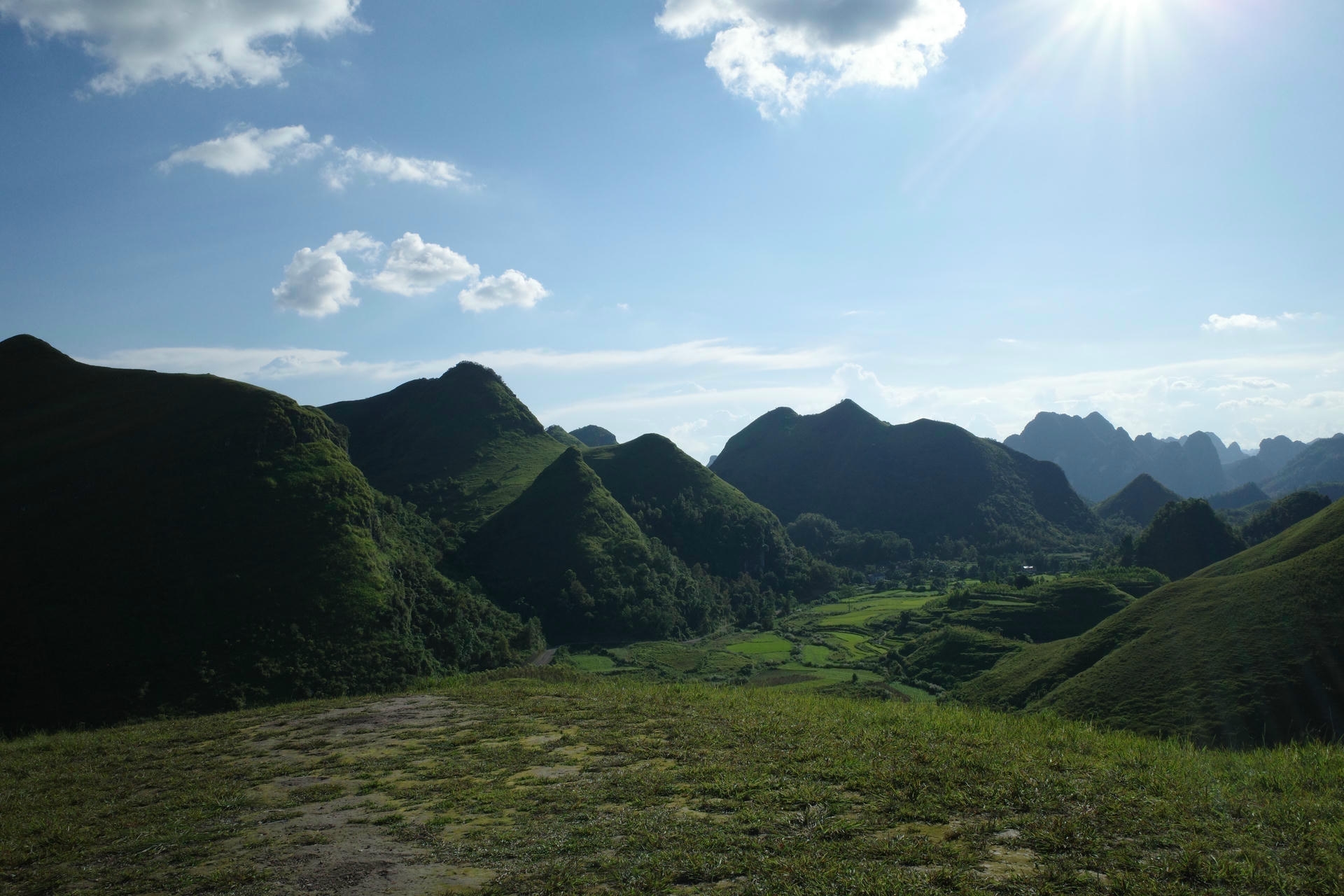
At the top, wide grassy slopes open to sweeping views. From May to October the hill glows bright green; from October to January the grass turns warm golden brown. You can sip a coffee at the tiny summit café or sprawl out in the tall grass and watch the light shift. I stayed for nearly three hours and loved every minute.
Bản Giốc Waterfall
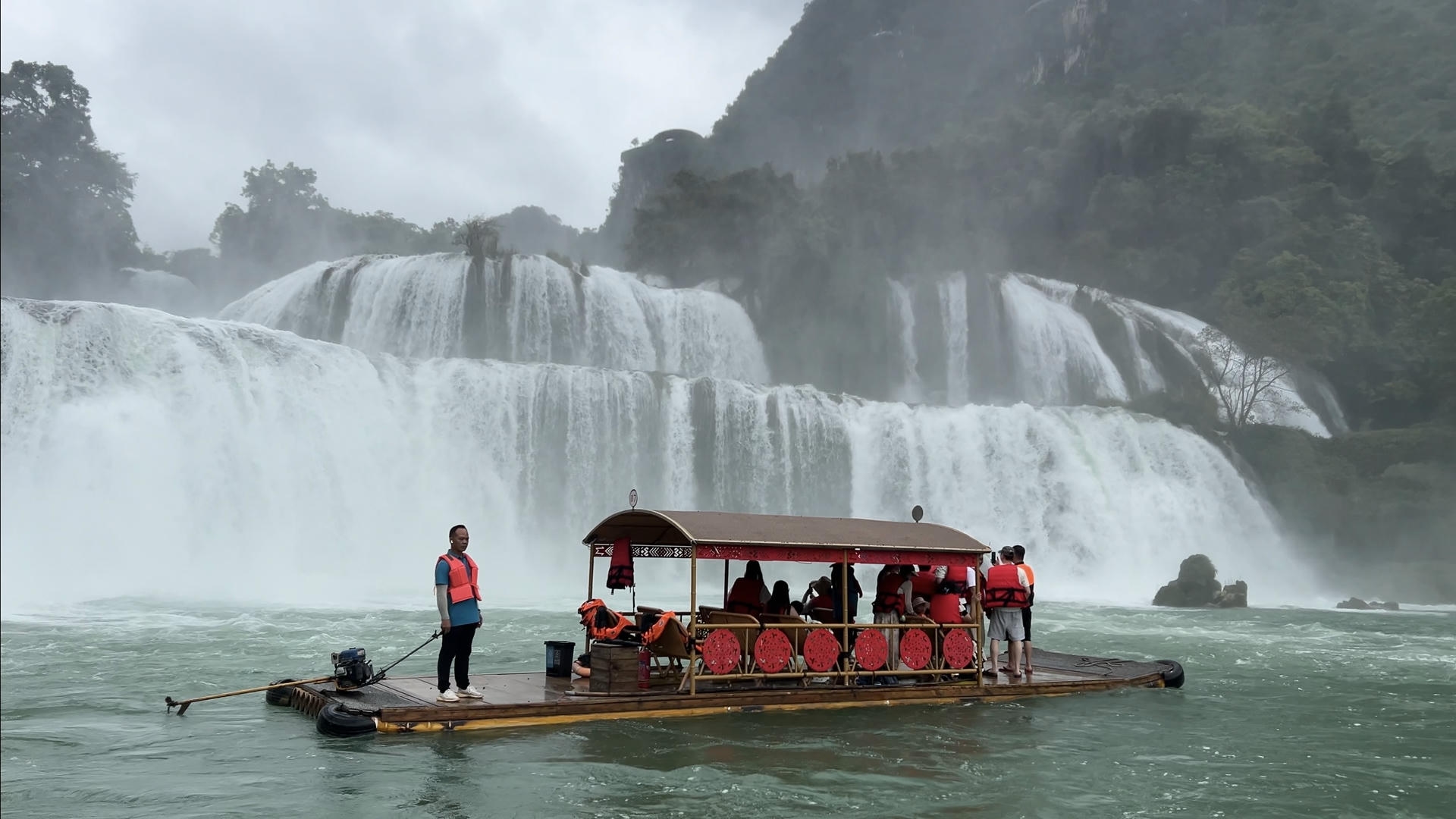
Ride another 50 km to reach Bản Giốc Waterfall, the crown jewel of Cao Bằng and one of Asia’s most spectacular cascades. The Quây Sơn River plunges over a 30 meter drop in a curtain nearly 300 meters wide right on the border with China. Take the 20 minute boat ride to feel the spray and watch the water split into three tiers as it crashes into turquoise pools
At the entrance you can rent a traditional nón chúp, a flared conical hat unique to this region, for about 10,000 VND and wear it as you explore. As you leave the gate, treat yourself to a cup of thạch đen (black grass jelly), a local dessert with a cool herbal flavor, for around 15,000 VND.
Khuổi Ky Stone Village
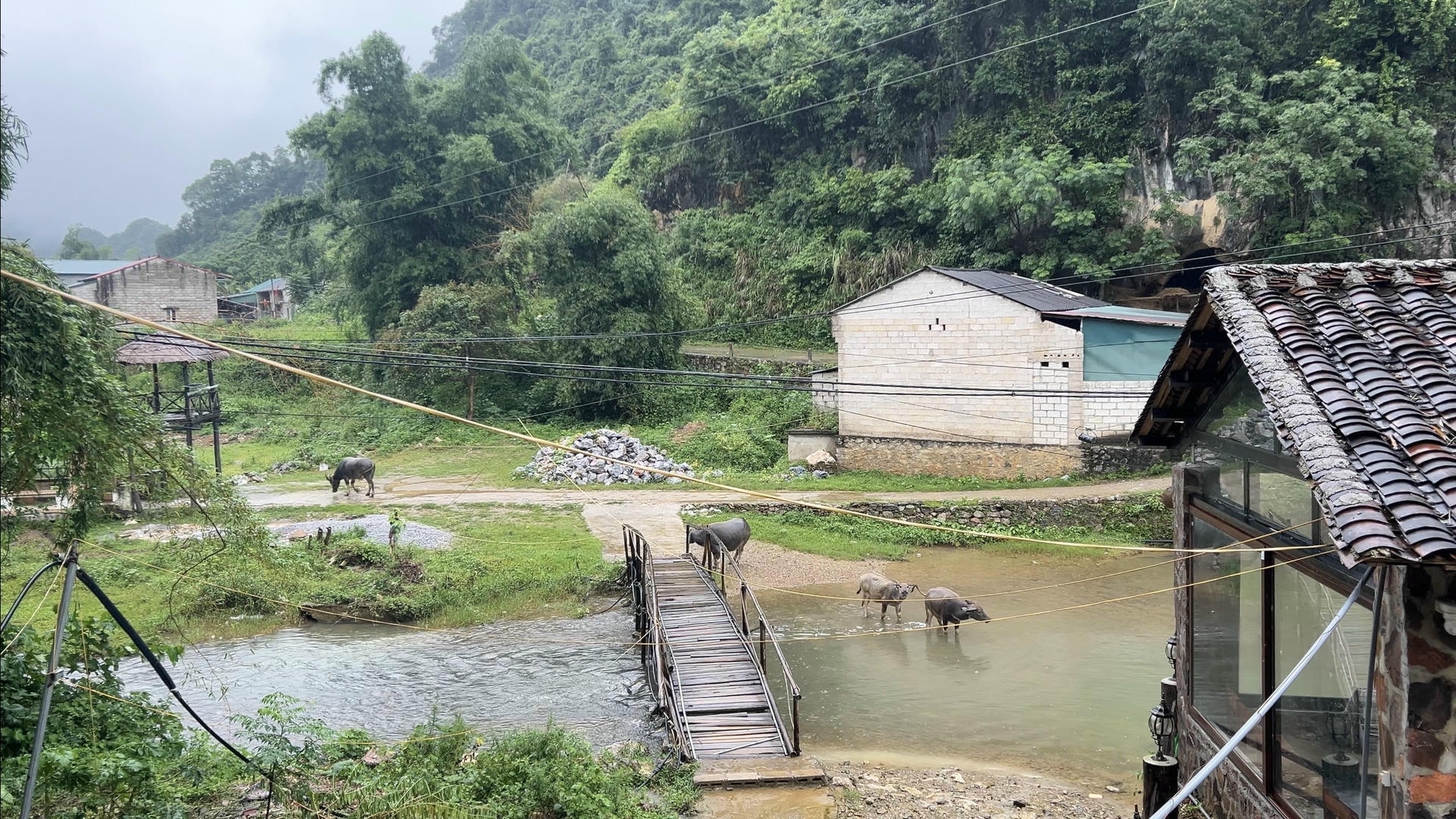
A short ride away lies Khuổi Ky Stone Village, a 400 year old Tày community built almost entirely from river rock. Limestone peaks and clear streams surround the sturdy stone houses, giving the village a timeless feel. Spend the night if you can to enjoy a dinner of local specialties. Evenings often feature Then singing and sạp dancing, traditional Tày music and dance that fill the stone courtyards with sound and movement.
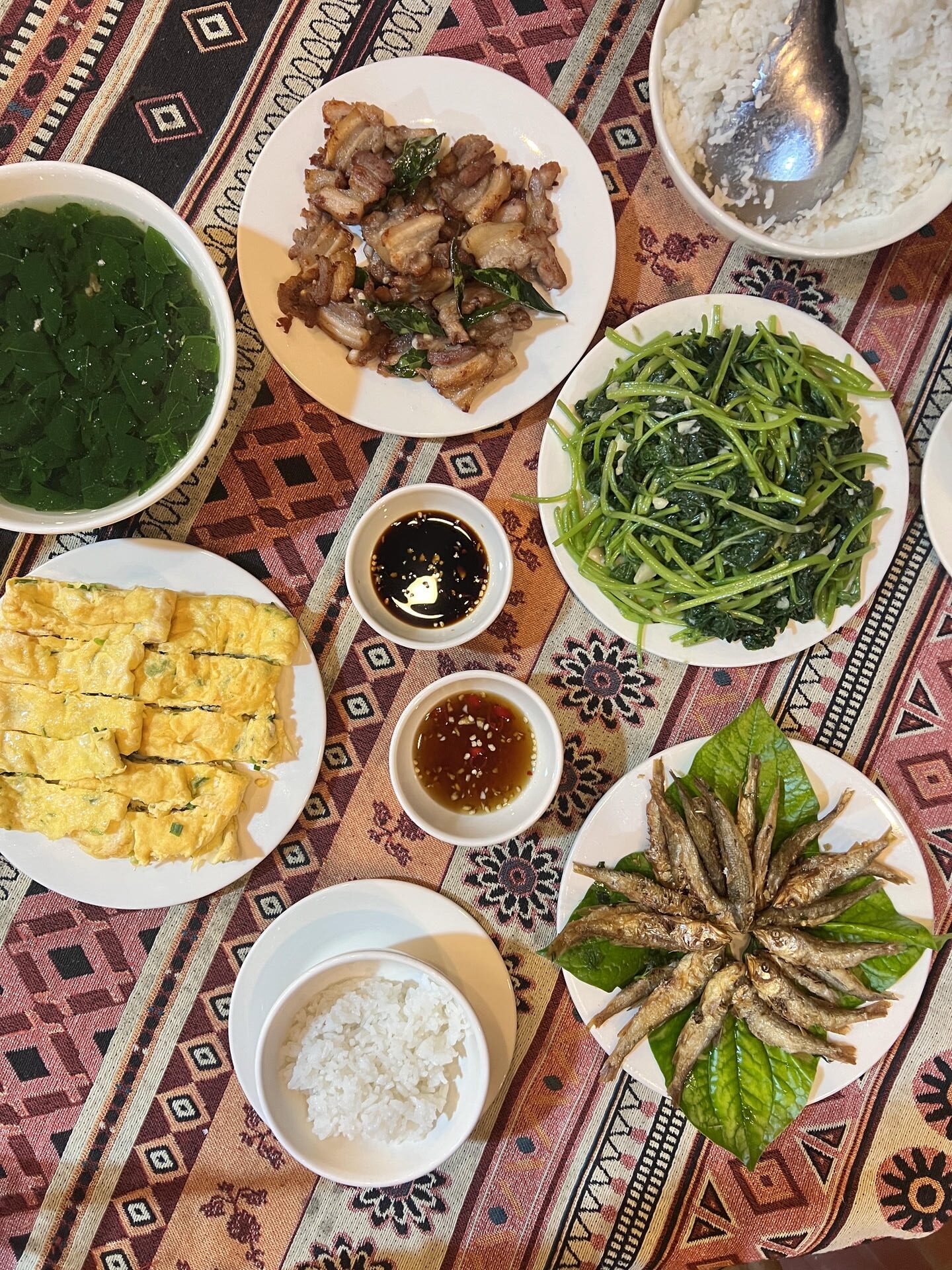
For a cozy stay, I recommend Triệu Hoan Homestay for warm hospitality and good value or Lan Rừng Homestay, where I slept beside a peaceful stream and fell asleep to the sound of running water. Both make a perfect base to wake up to the quiet rhythm of Khuổi Ky.
Day 2
Ngườm Ngao Cave > Ngọc Côn > Angel Eye Mountain
Start your morning with a slow wander through Khuổi Ky Stone Village. With only 14 stilt houses it doesn’t take long to see everything. I even found a tiny bánh cuốn spot right in the village for breakfast before heading back to the homestay for a coffee and to pack up.
If you love culture like I do you, you might enjoy the extra stories and history I gathered in The Timeless Stonework of Khuoi Ky Stone Village.
Ngườm Ngao Cave
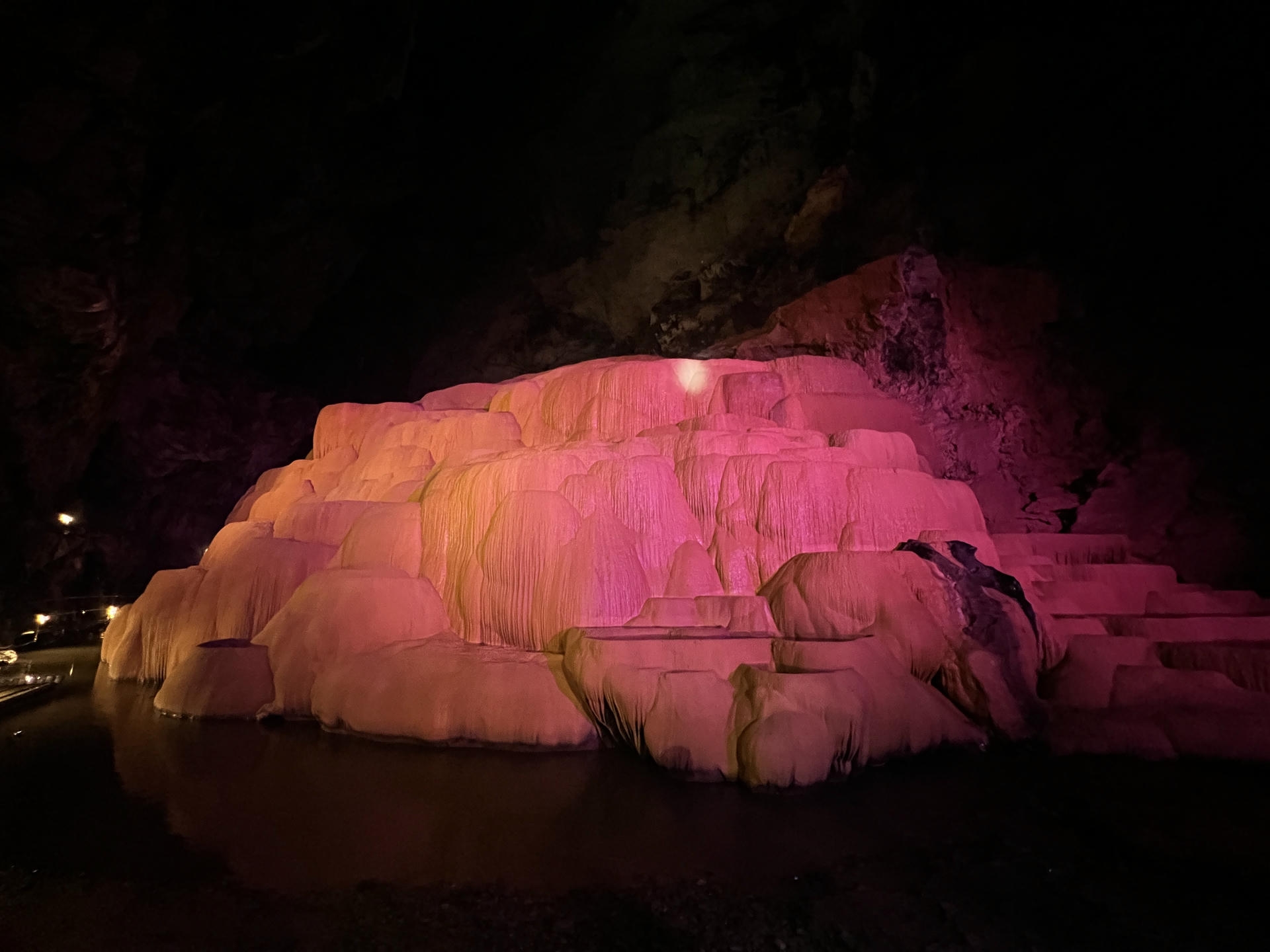
Your next stop is Ngườm Ngao Cave, a short walk from the village (if you stayed in Khuổi Ky the night before). This limestone cave began forming about 400 million years ago and stretches deep under the karst mountains. You can choose the short 30-minute path for 45,000 VND or the full guided route (about 90 minutes to 2 hours) for 200,000 VND. Guides provide reflective vests, sturdy shoes, and headlamps so you can explore safely.
The long route is the one I recommend. Inside, the temperature drops and the air feels cool and damp as you follow a trail past towering stone columns, glittering stalactites, and winding chambers. The guide explains how the cave was carved by ancient underground rivers and points out rock formations shaped like animals and mythical figures. The journey ends at a huge natural opening that feels like the cave’s grand mouth, then you retrace the same path back to the entrance.
Cò Là Waterfall (Optional)
If time allows, make a side trip to Cò Là Waterfall. The ride passes green fields and wooden footbridges across the Quây Sơn River, and the water is the same clear jade as Ban Gioc. It’s so under the radar that even most Vietnamese travelers skip it, which makes it feel like your own secret spot.
It’s right along the road to Ngọc Côn, but head out before 11 AM so you don’t end up chasing daylight. Some people camp here, but unless you came ready for a night under the stars, it’s the perfect quick stop to stretch, snap a photo, and breathe in the quiet before you keep rolling.
Ngọc Côn and Pi Phà Viewpoint
The route continued for about 25km to Ngọc Côn, a mountain area wrapped in misty peaks. From there you can hike to Pi Phà Viewpoint, about a 30–40-minute climb. The trail is still rough and can be slippery in the rainy season, so good shoes are essential. I wasn’t lucky with the weather and had to skip the summit, but on a clear day the panorama is unforgettable.
Angle Eye Mountain (Núi Mắt Thần)
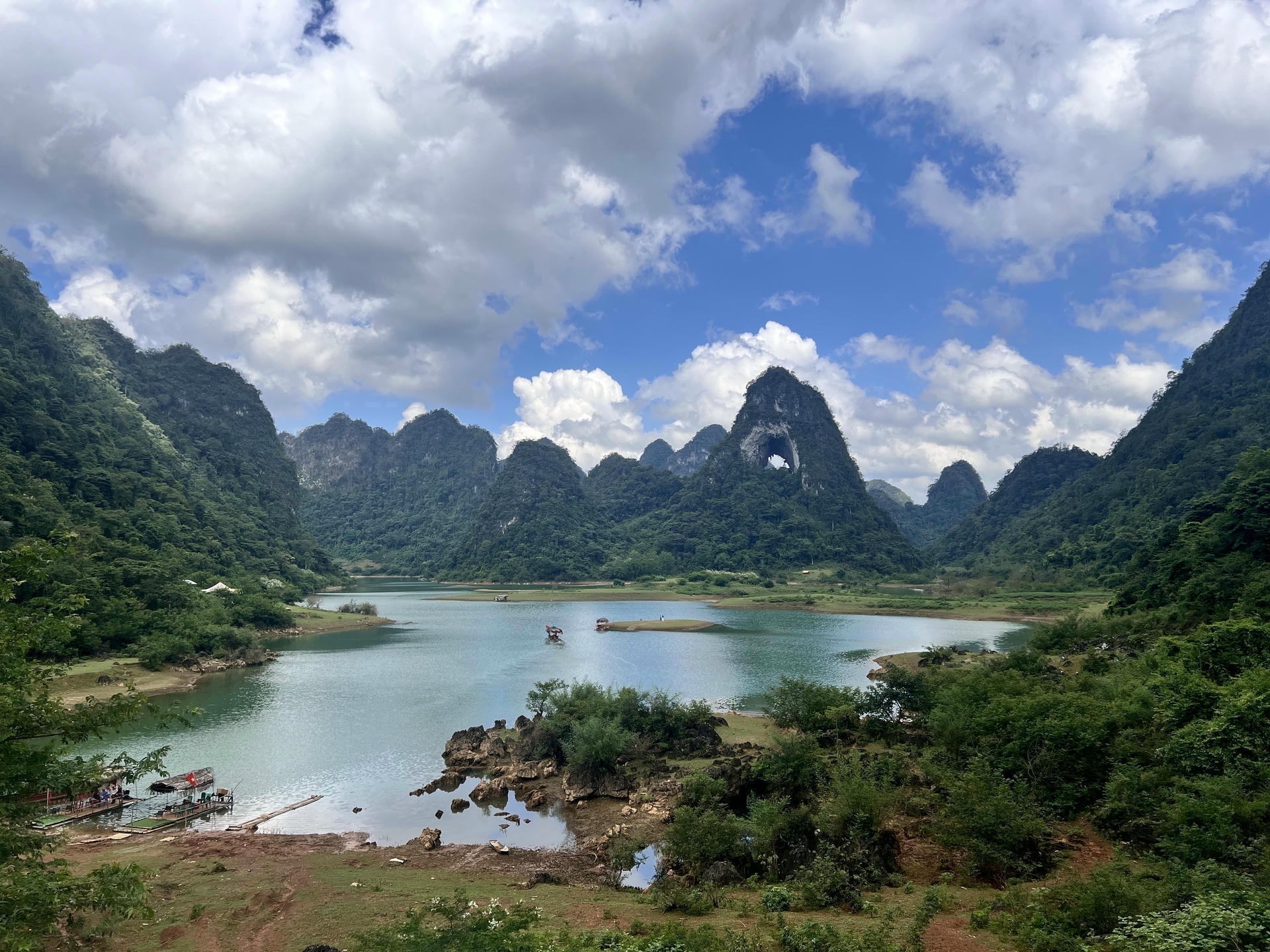
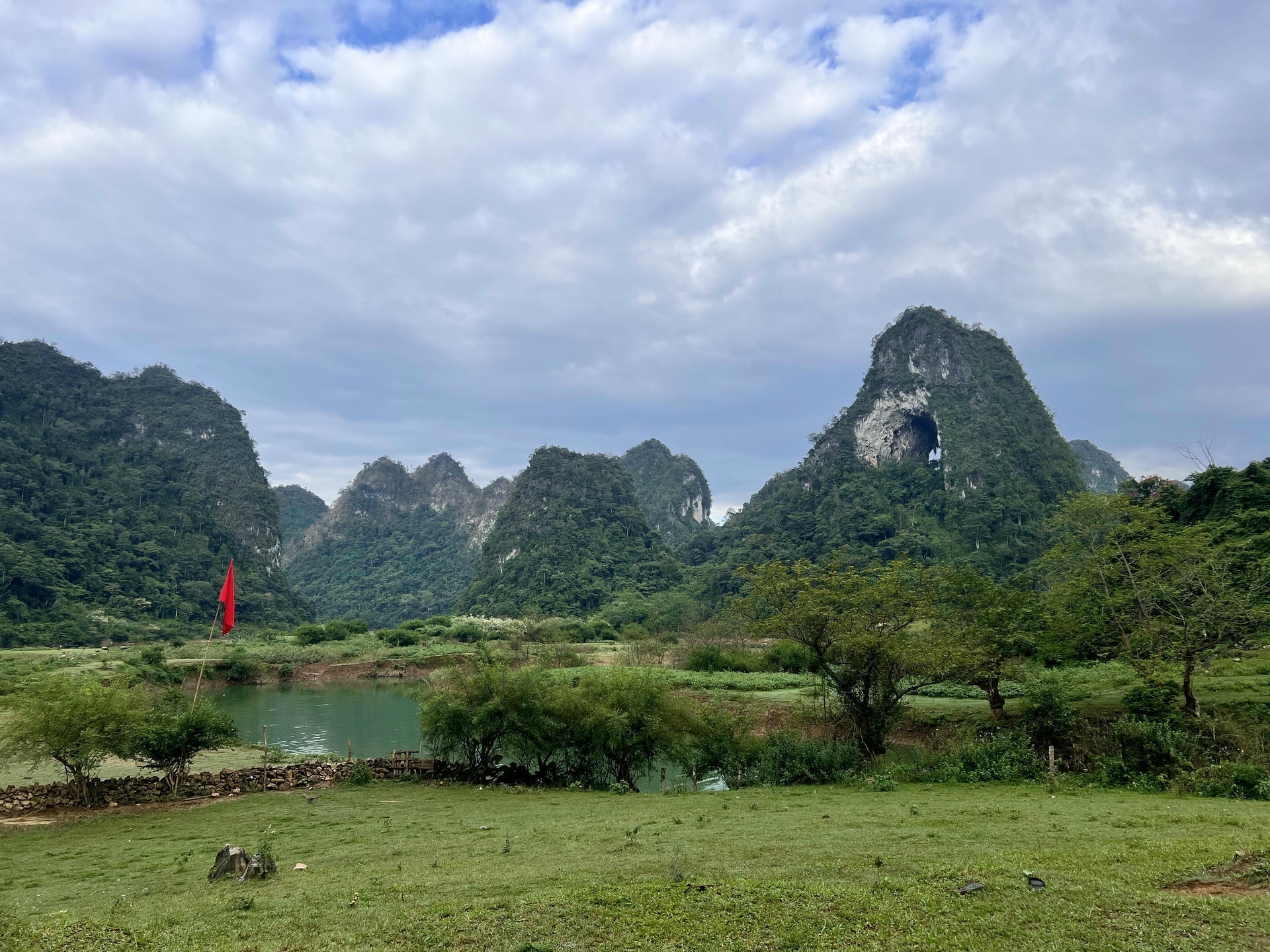
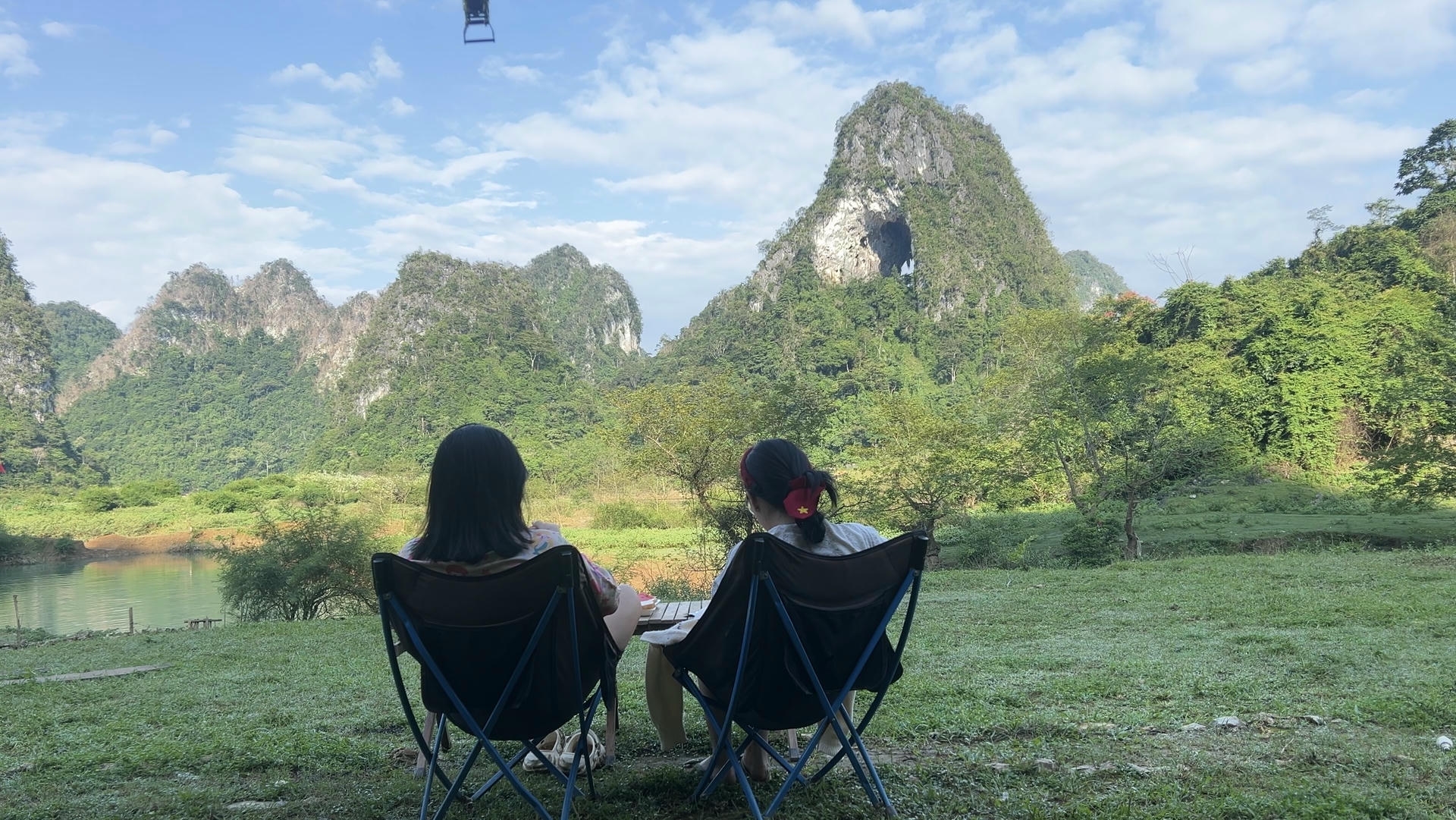
From Ngọc Côn it’s about 64 km to Angel Eye Mountain, a massive limestone dome with a perfect circular hole through its center. The final stretch is rocky and steep. If you’re not confident riding up sharp inclines, park at the base and hike. I decided to camp overnight and rode all the way to the top. There’s a small stall selling drinks, so stock up if you plan to stay.
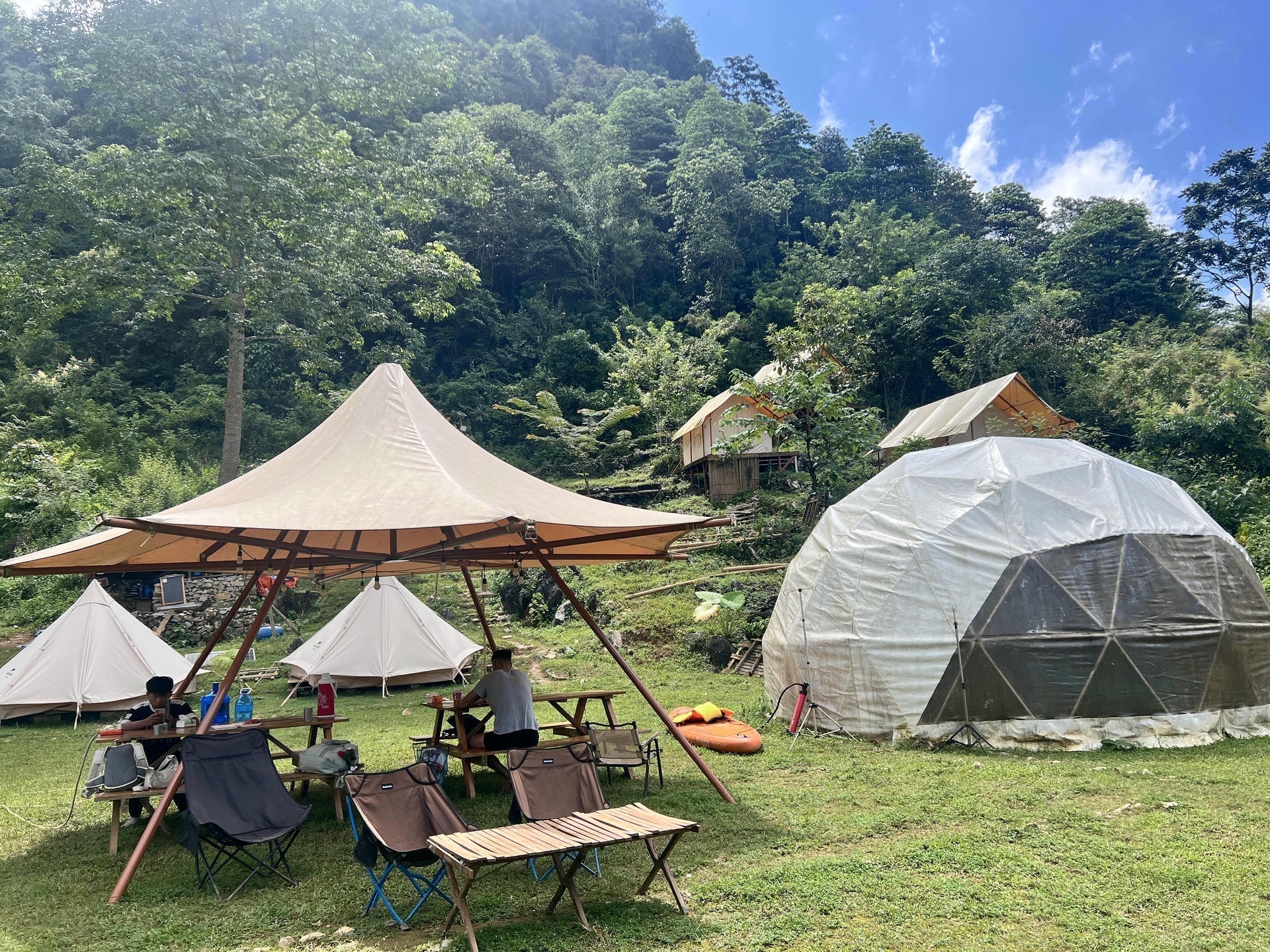
I booked a tent with Cao Bang Eco Camping, which takes care of everything. They offer two styles: a pointed tent for 750,000 VND or a house-shaped tent for 850,000 VND, complete with dinner and breakfast. Check-in runs from 4 Pm to 9 PM, but it’s best to arrive earlier to settle in while it’s still light. In the rainy months you might get to paddle a SUP board on the lake; in the dry season the grasslands open up for biking and wandering. The campsite provides clean toilets and portable lights for moving around at night, but the facilities are a bit of a walk from the tents, so it’s best to shower before dark or wait until morning.
Camping here is optional. For a budget-friendly stay you can sleep at Nhà Mộc Homestay, about 300 meters from the mountain, or ride back to Cao Bang City, where hotels and homestays are plentiful. Staying near Angel Eye Mountain, though, lets you ride a particularly beautiful road to the next day’s destinations, a stretch I think is worth experiencing.
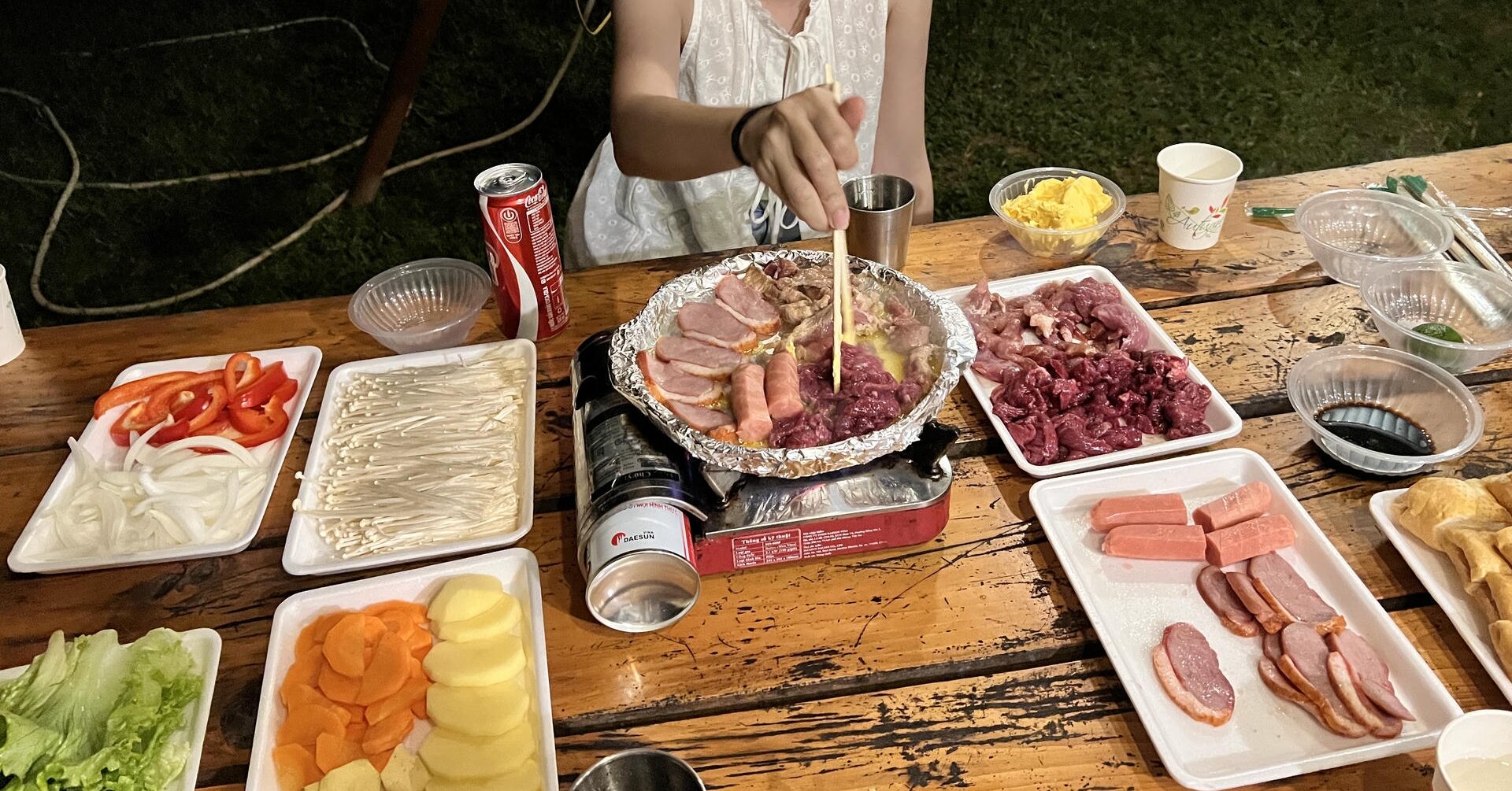
As night fell we shared a hearty meal and even sampled a little rượu ngô (corn wine) that locals joked tastes like “fake whisky.” I don’t drink much, but it was fun to try. We spent the evening stargazing—on clear nights you can sometimes catch the Milky Way—and chatting with the camp host, they were really good at opening communication. Then it was off to sleep under a sky full of mountain air.
Day 3
Thang Hen Lake > Lenin Stream > Pác Pó Cave
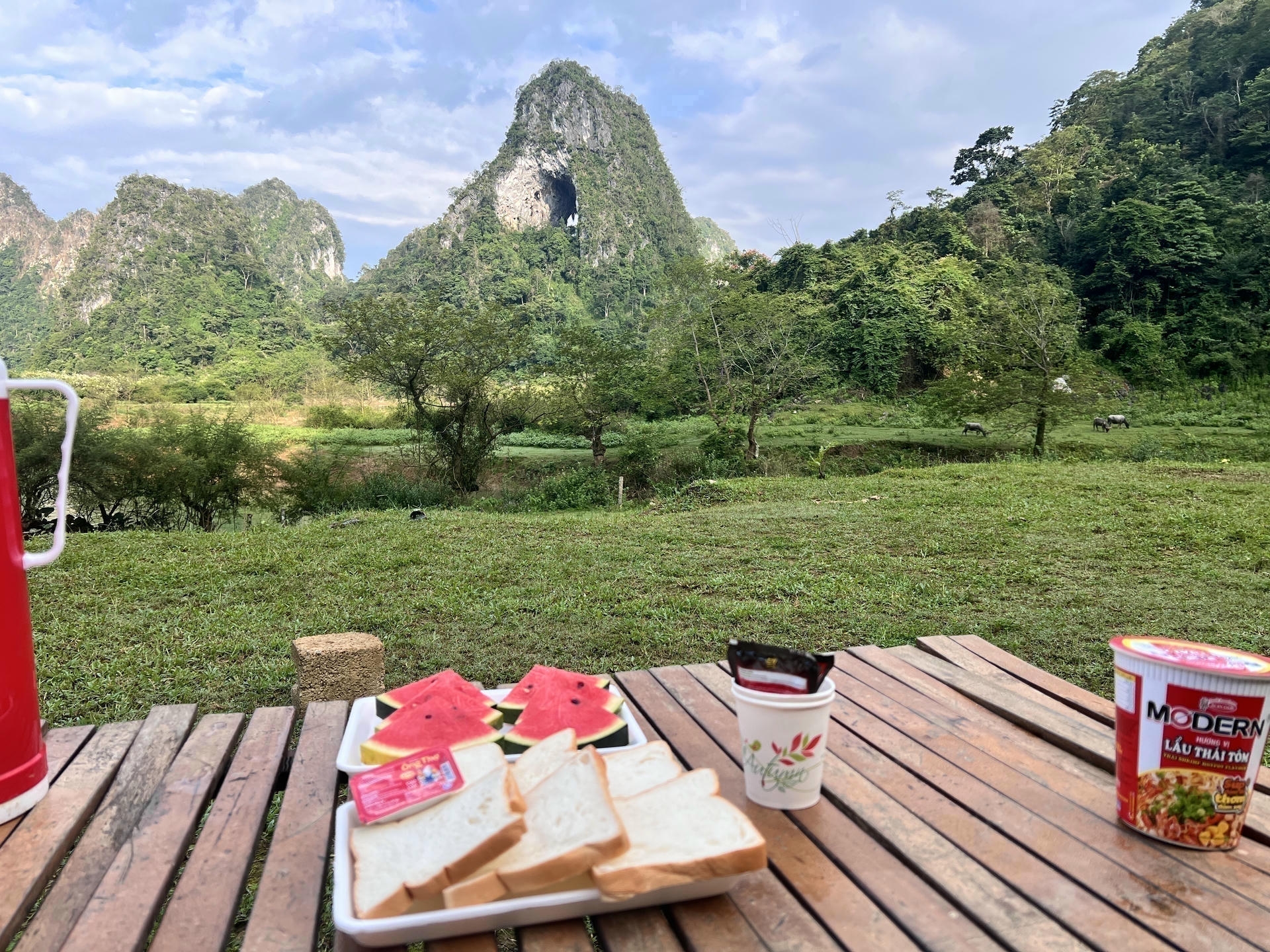
If you camped at Angel Eye Mountain, wake early and take in the dreamlike morning view. Mist drifts over the peaks while the lake below mirrors every shade of green. It is one of those I can’t believe I’m here moments that makes you linger over a simple breakfast of instant noodles and coffee before heading out.
Thang Hen Lake
Your first stop is Thang Hen Lake, just a few minutes downhill from the campsite. This is not a single lake but a chain of about 36 emerald pools winding through limestone valleys. Local Tày people say “Thang Hen” means “tail of the bee,” and from above the main lake really does curve like a giant bee’s tail. Formed when underground rivers collapsed thousands of years ago, the water lies like a jade mirror surrounded by forested cliffs and soft morning light.
Pác Bó Historical Site
From Thang Hen it is about 56 km to the Pác Bó Historical Site. Check in at your accommodation and have lunch before exploring. Many travelers stay at Mế Farmstay, a working farm where guests can join daily activities, while I chose Pác Pó Boutique Hotel for its warm, cozy décor. The prices are similar, so you can pick whichever style you prefer.
Pác Bó is considered an essential stop in Cao Bang and is rarely missed by visitors. In 1941 Ho Chi Minh returned to Vietnam after thirty years abroad and lived and worked here while planning the revolution. The site combines striking natural scenery with deep historical significance, showing how the country’s modern history began in these quiet mountains.
To understand the full story behind these quiet trails, check out my post The Historical Meaning of Pác Bó for more context before your visit.
Tickets cost 20,000 VND. After buying a ticket, a shuttle bus first stops at the Ho Chi Minh Memorial Temple, directly opposite the 0 km milestone of the Hồ Chí Minh Trail, the symbolic starting point of the historic road that later linked north and south Vietnam. From there you board a second electric cart that carries you deeper into the valley.
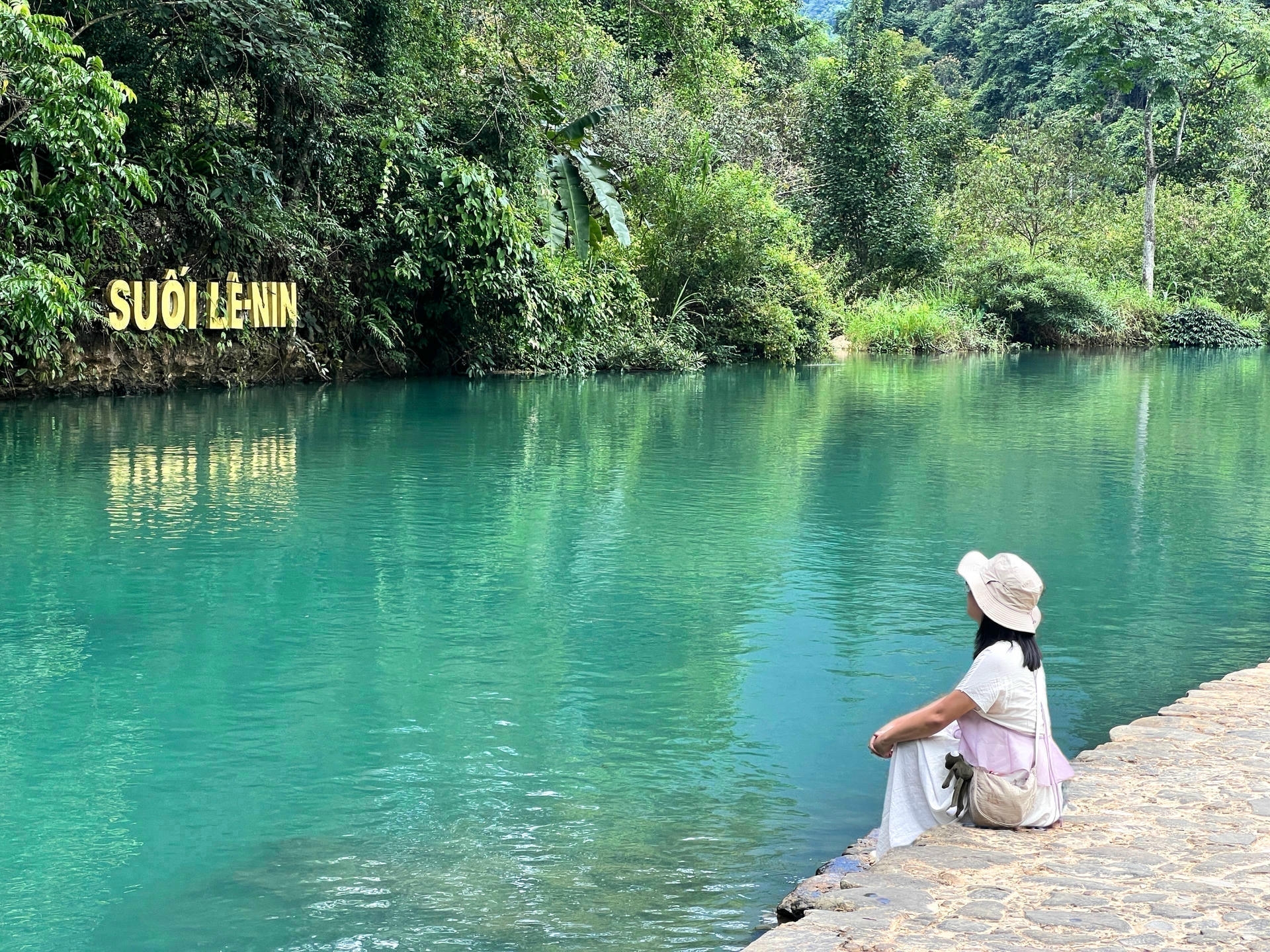
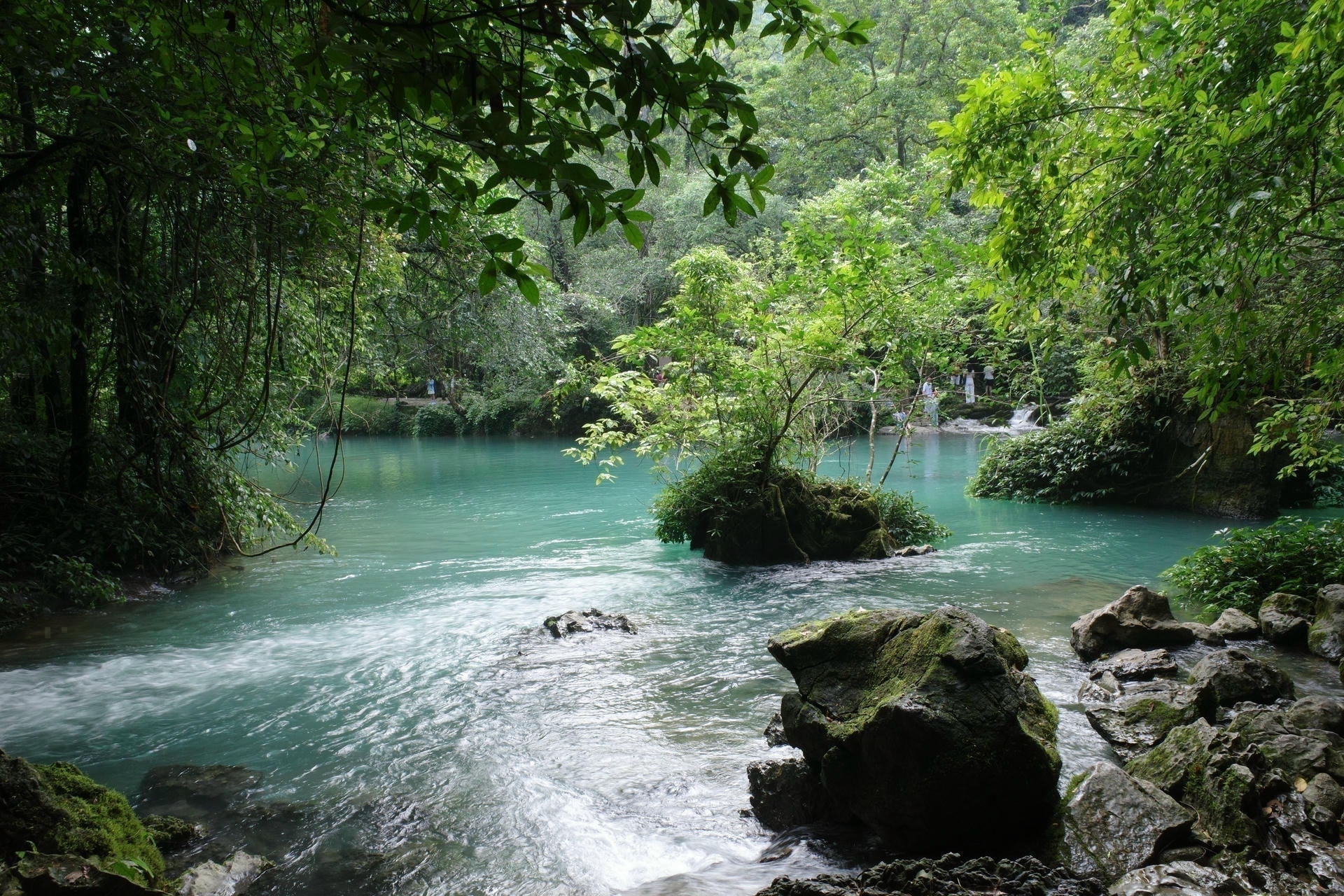
The path leads first to Lenin Stream, its clear turquoise water flowing gently beneath the jungle canopy with Karl Marx Mountain rising behind it. Ho Chi Minh himself named the stream after Lenin to honor his revolutionary ideals. The water is so pure and cold that locals believe touching it brings good luck and a sense of renewal.
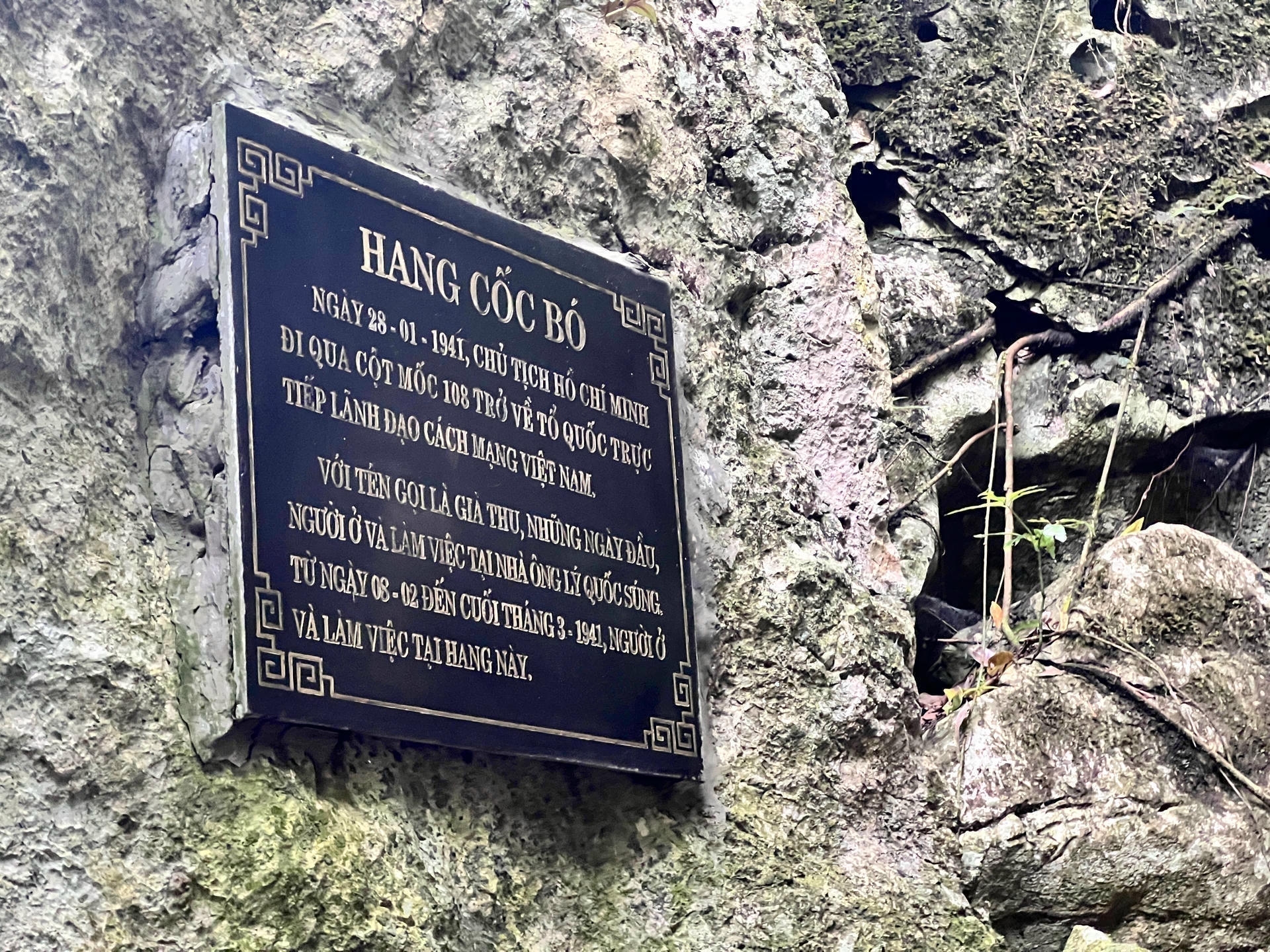
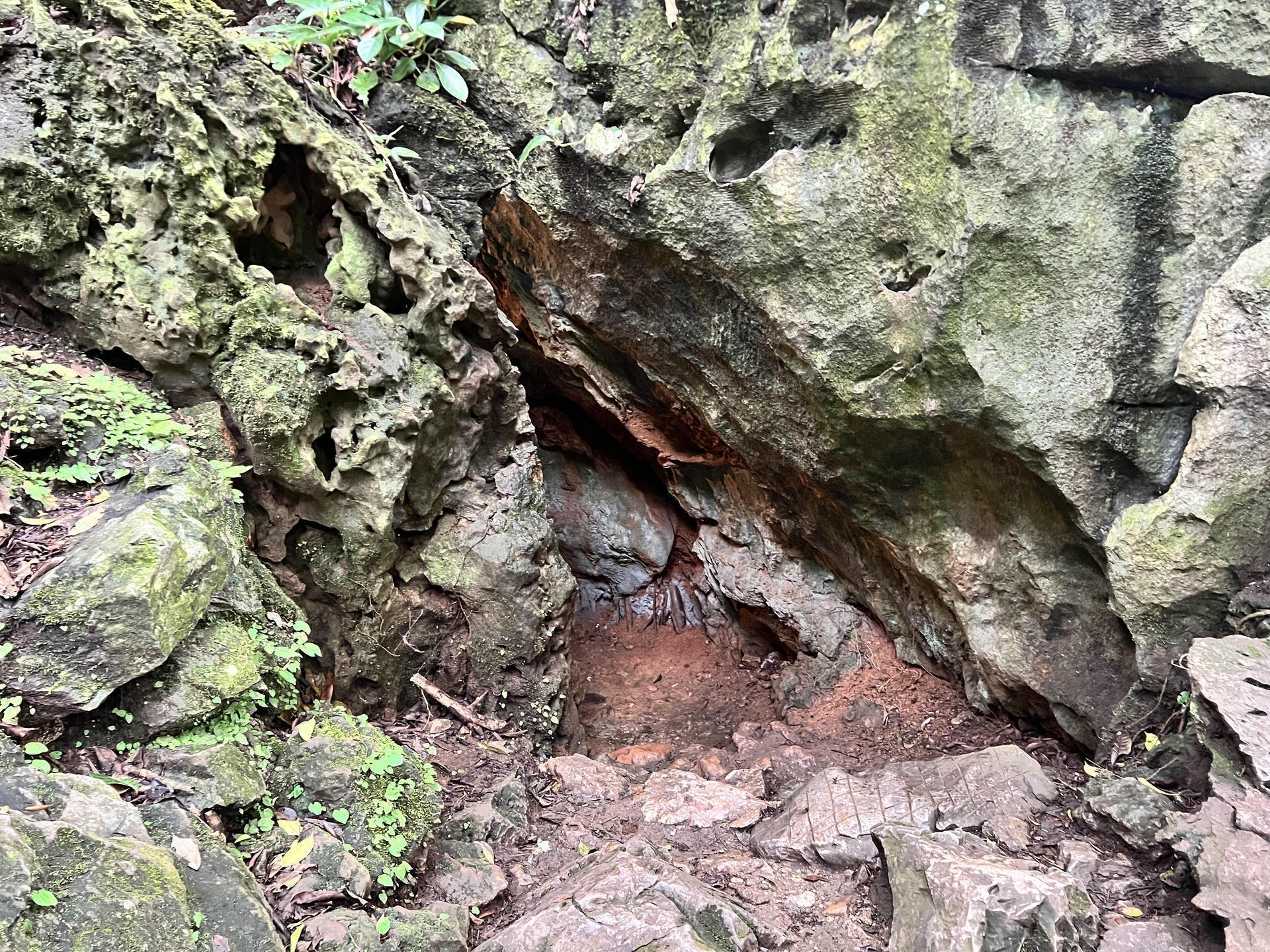
Continue along the marked walkway to a set of stone steps that climbs to Pác Bó Cave, where Ho Chi Minh once lived and worked. Inside the narrow chamber you can picture the long nights he spent planning Vietnam’s independence.
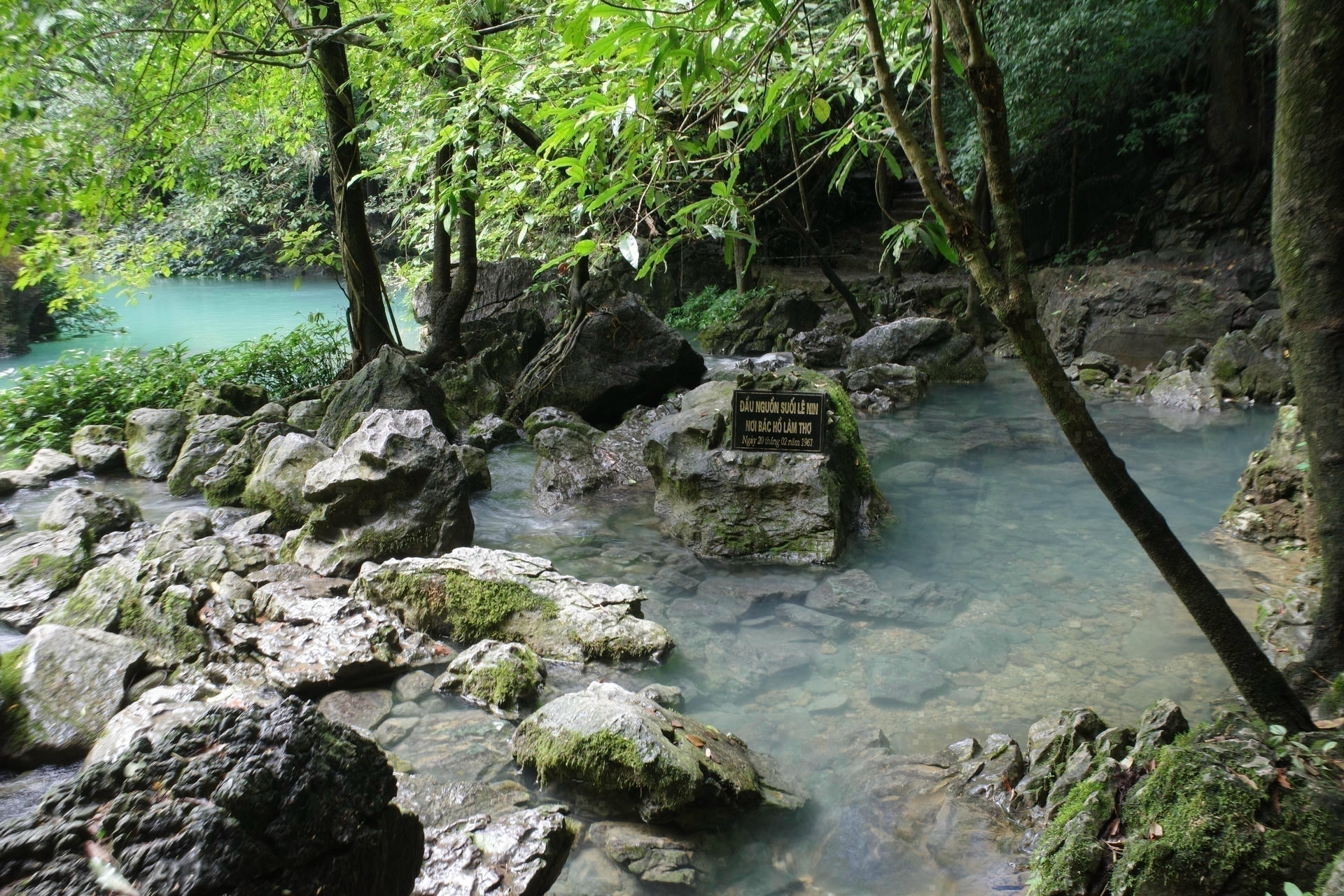
After visiting the cave, walk back down and follow the same main path toward the end of the valley to reach the headwaters of Lenin Stream, where the water emerges cool and crystal clear from the rocks. Near this spot a marked side trail leads to Bàn Đá. Take this staircase and the connecting walkway to cross safely to the far side of the stream—never try to wade across, as the current and slippery stones can be dangerous.
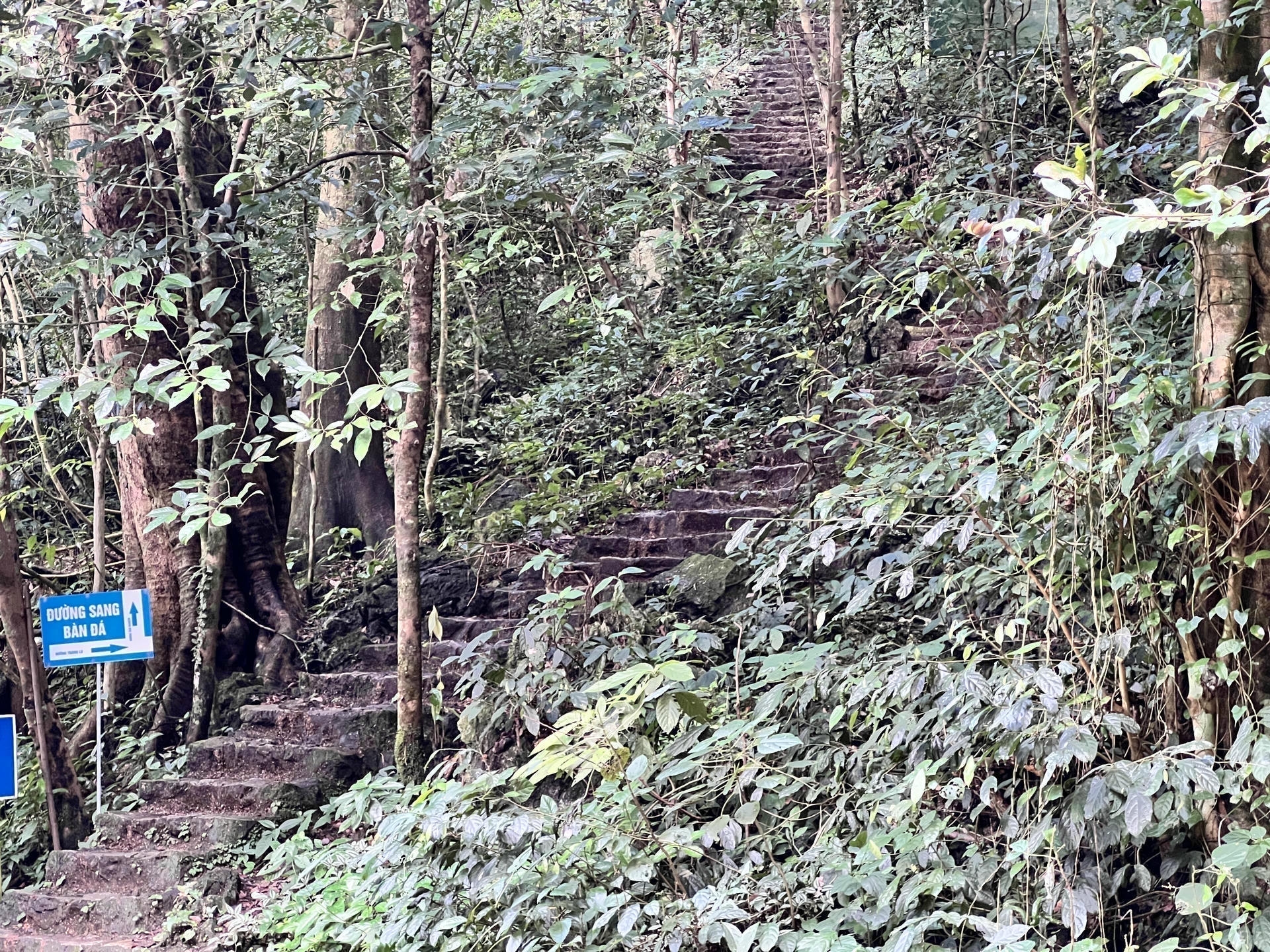
On the far bank the path runs right beside the water, perfect for sitting and dipping your hands into the source, a simple gesture locals believe carries a blessing. A short distance beyond is Bàn Đá, the moss-covered stone where Ho Chi Minh often sat to work and fish. The setting feels both historic and quietly poetic. Follow the signs back along the path and the electric cart will return you to the parking area.
After exploring these historic places, head back to your homestay for a relaxing evening. A hot shower, a good meal, and a peaceful night will set you up well for the next day’s ride.
Day 4
Khau Cốc Chạ Pass – Cao Bằng City
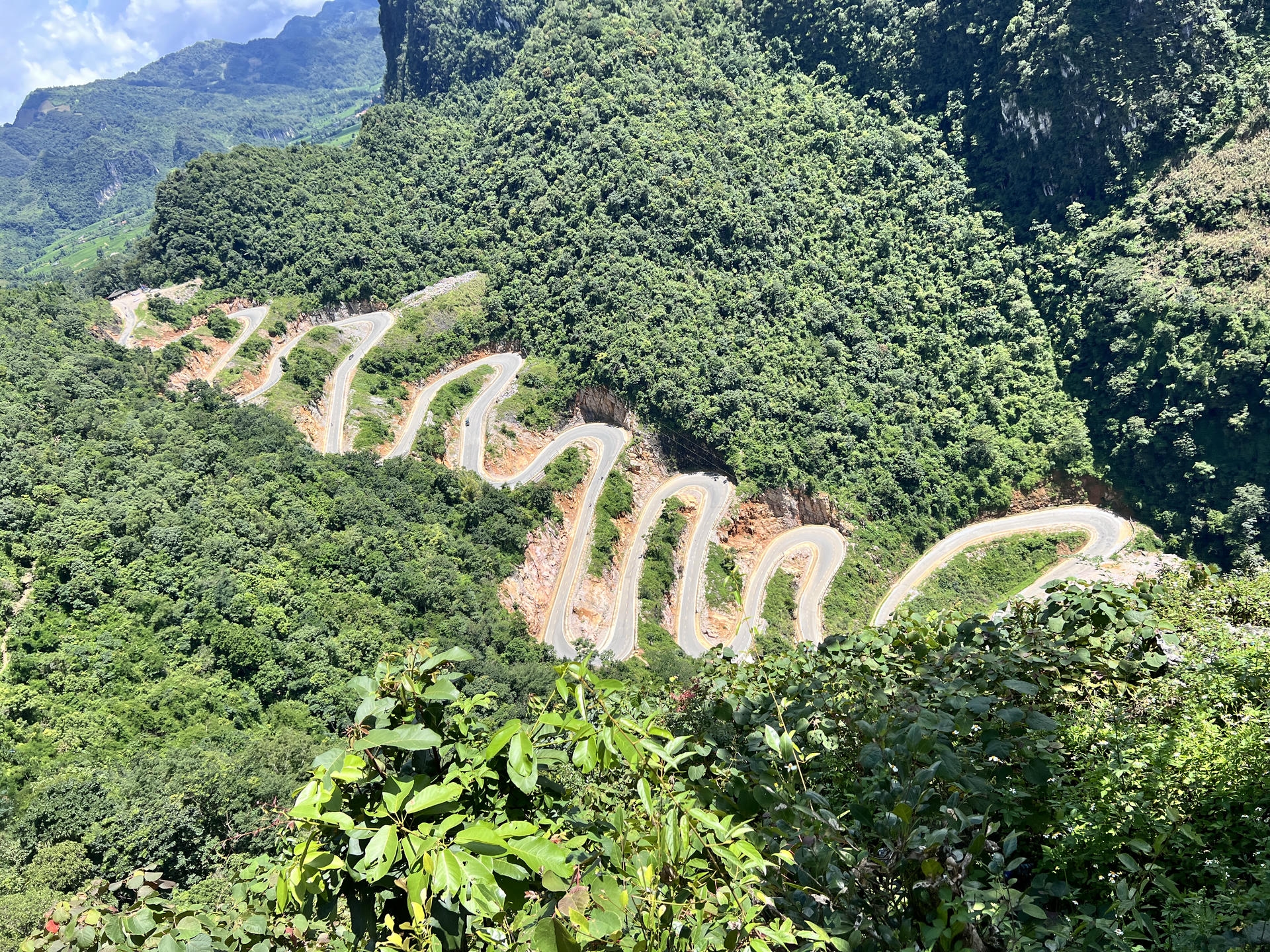
After breakfast at your hotel, set out for Khau Cốc Chạ Pass, about 54 km from Cao Bang. This stretch is the most winding and dramatic of the entire loop, a ribbon of tight curves that keeps you leaning through one switchback after another.
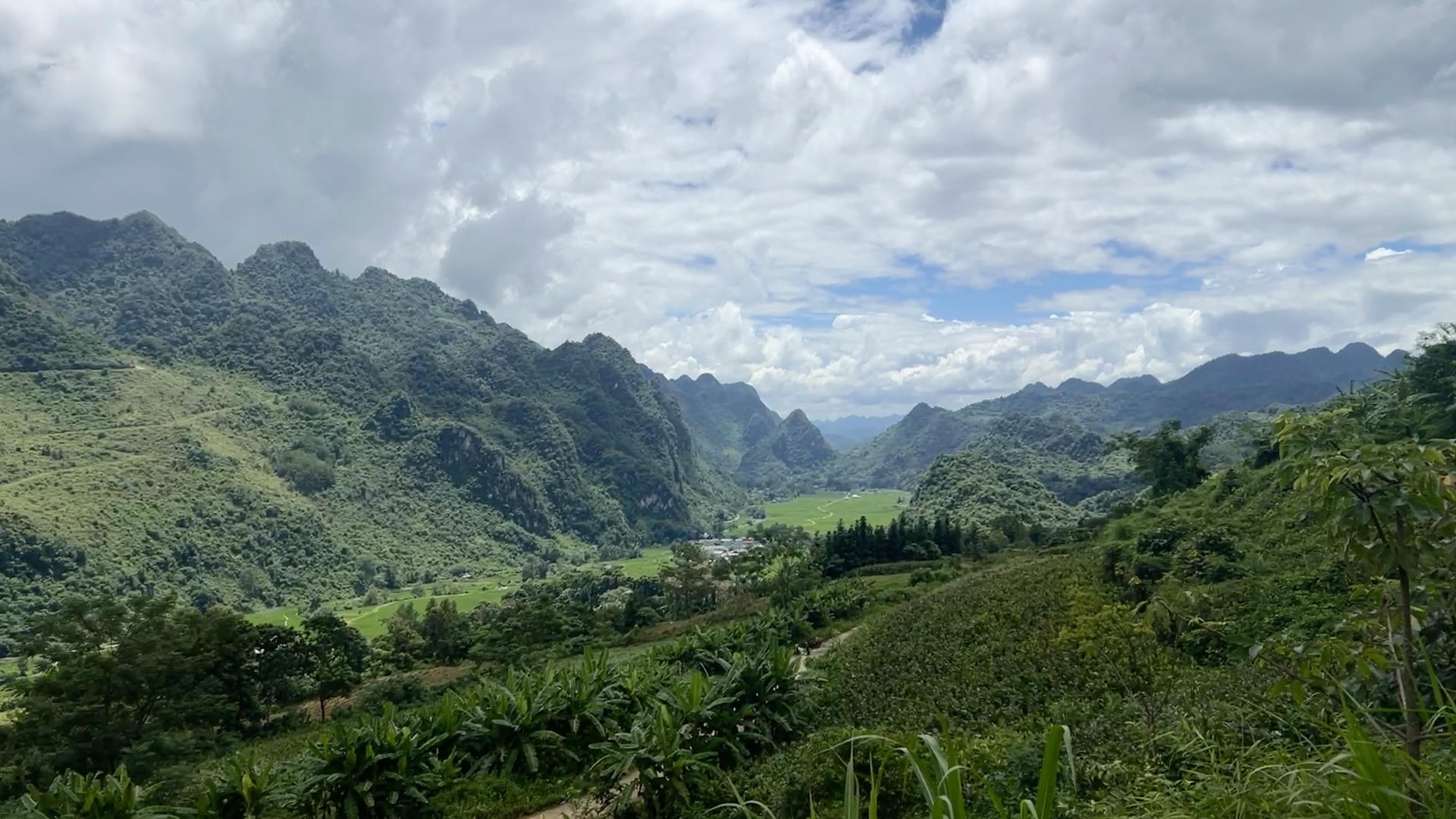
If you ride from the Ha Giang side, you can take on the full pass for a true mountain challenge. Coming from Cao Bang, like I did, you simply reach the base of the pass and hike up a hill to a lookout point to take in the view of its endless switchbacks.
Yet on the way there you’ll cross Nà Tềnh Pass, often called a warm-up for Khau Cốc Chạ, with sweeping bends and forested valleys that give a taste of what the big pass is like.
At Khau Cốc Chạ you park the bike at the base and hike about 30 minutes to the viewpoint. The first stretch is a paved trail and easy to follow, but the upper section is steeper and rougher. The reward at the top is a panoramic view of a road that loops and folds through the mountains like a giant ribbon. If I could do it again, I’d pack a cup of instant noodles or a sweet iced coffee to enjoy while admiring that view.
Back to Cao Bang City
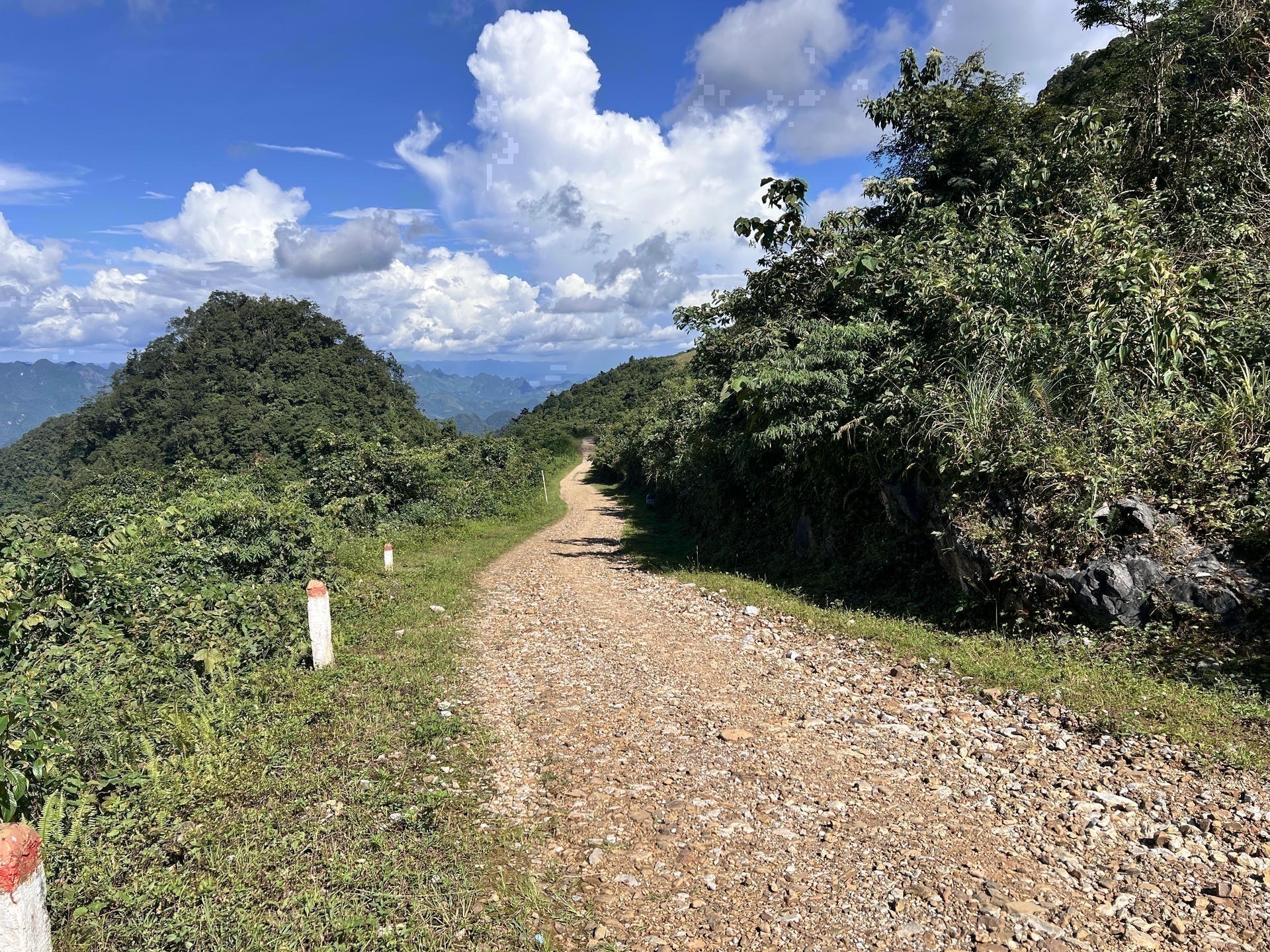
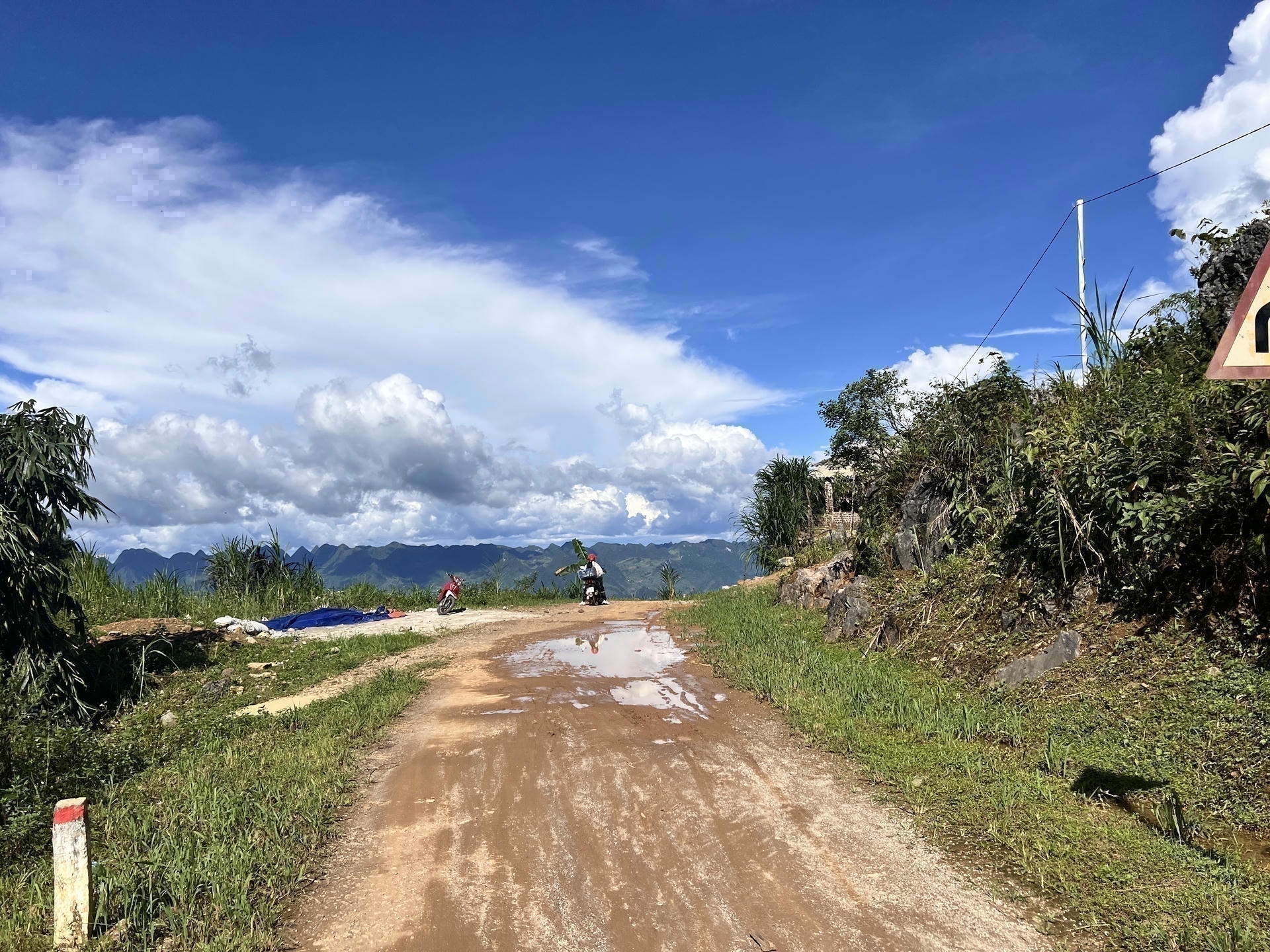
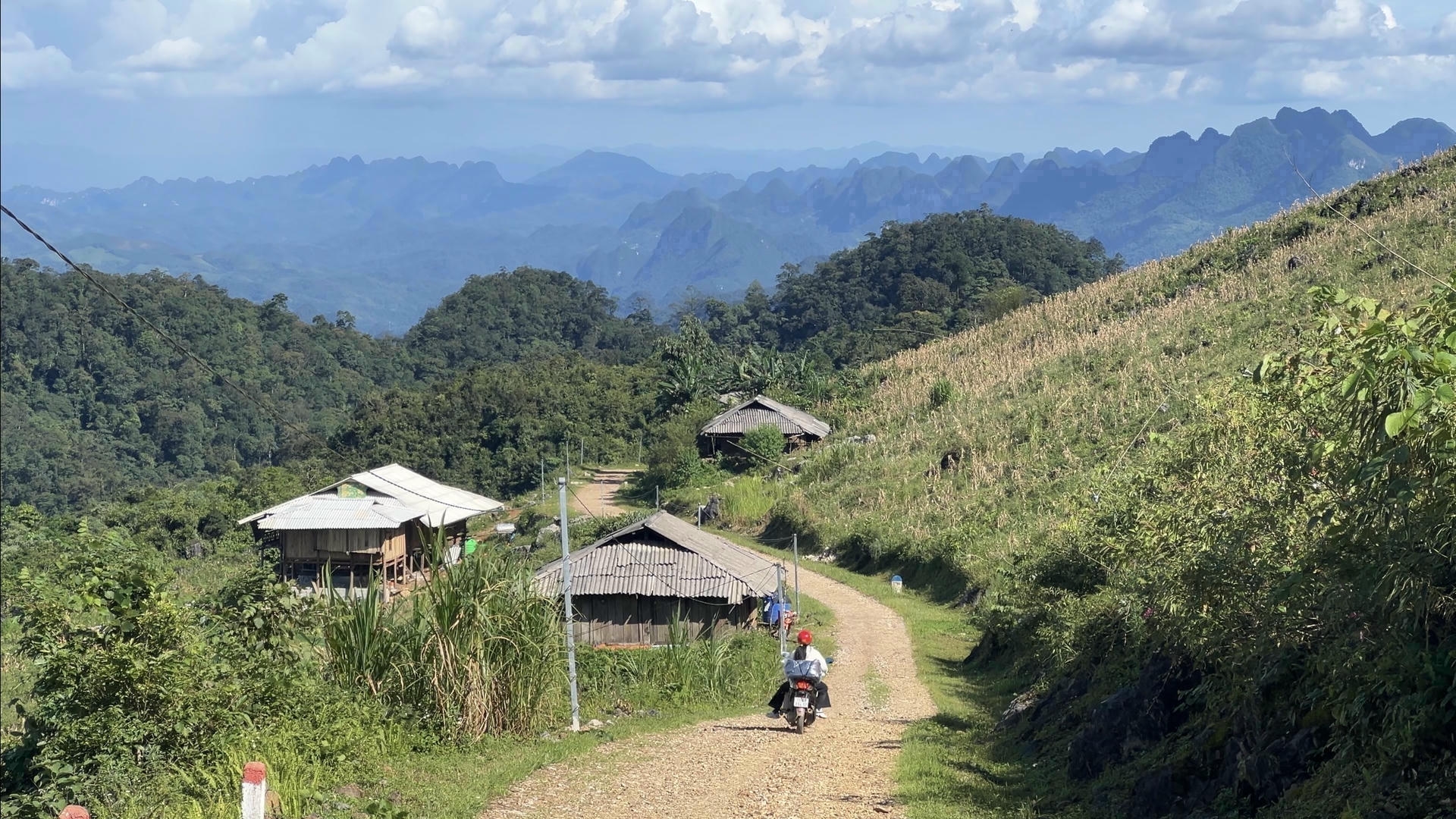
When you start the return ride to Cao Bang City, pay close attention at the intersection marked Ngọc Động. Even if Google Maps tells you to turn left, do not. Stay to the right instead. The shortcut through Ngọc Động is a rough local road that is still under construction with rocks, bumps, and sharp curves that make it tiring unless you are a very confident rider.
If you accidentally head into the Ngọc Động road, you will notice from the very first meters that the surface is completely different from the smooth roads you have ridden so far. The farther you go, the worse it gets and the more time you will lose, so turn around immediately.
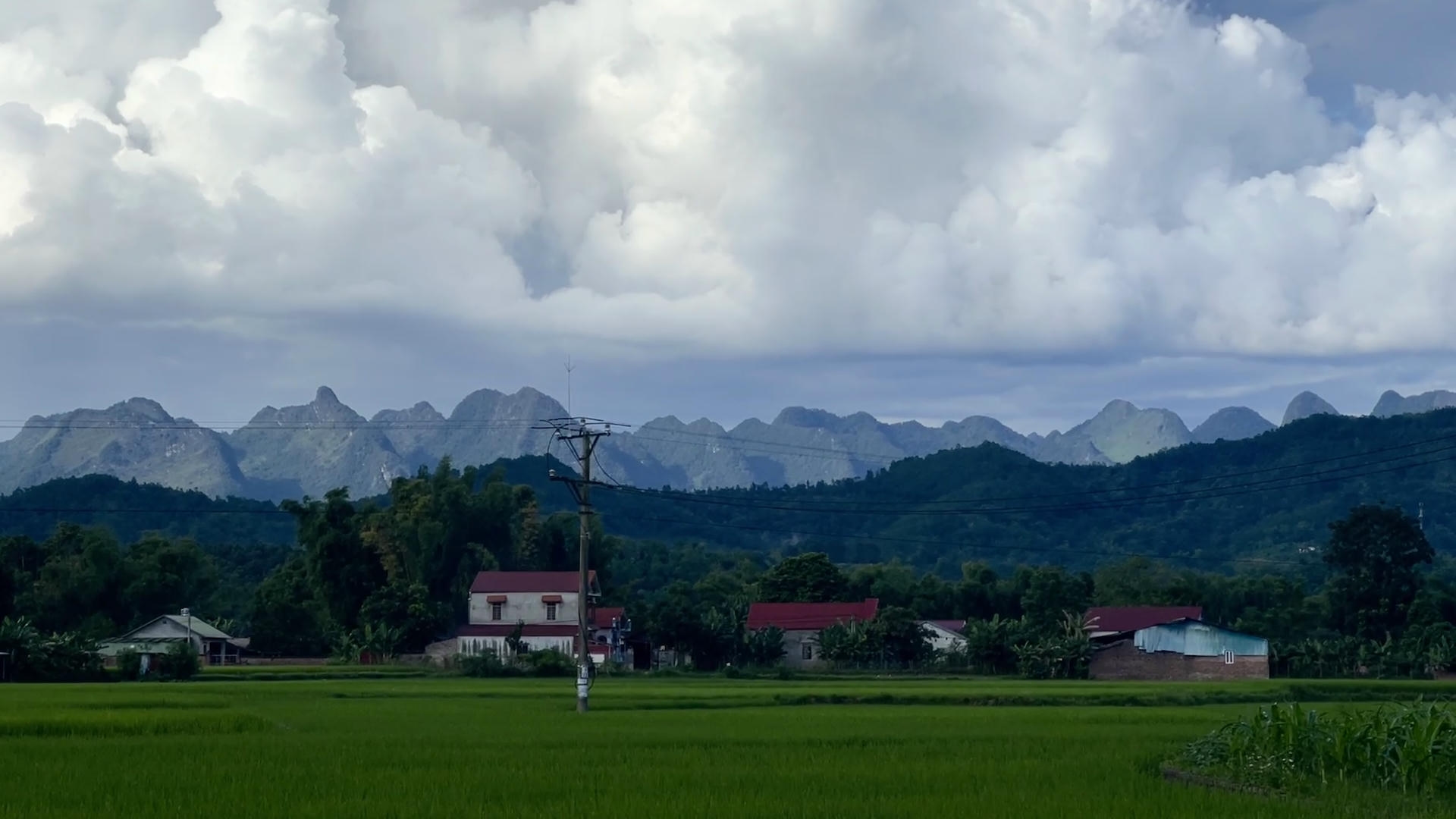
Taking the correct route is longer in distance at about 85 km, but the scenery is beautiful and the ride more comfortable. Cruise slowly, enjoy the final mountain views, and you will reach Cao Bang by late afternoon.
From here you can catch a night sleeper bus straight back to Hanoi, or do what I did and stay one more night to enjoy the local food you still missed on Day 1 and say a proper goodbye to this incredible loop.
Budget & practical tips
You’ve already seen costs scattered through this guide, but here’s a quick recap in one place. Starting from Hanoi, a straightforward 4-day loop usually runs about 5–6 million VND per person, covering the round-trip bus, motorbike rental, fuel, food, and homestays. Adding camping or a few extra experiences and you’re closer to 7–8 million VND.
I’ve mentioned most of these tips along the way, but it’s worth gathering them here with a couple of extras I picked up on the road:
- Download offline maps. Download offline maps. GPS can lag near the border, especially on the stretch from Bản Giốc Waterfall through Khuổi Ky Stone Village to Ngọc Côn, so save offline versions of Google Maps or Apple Maps if you’re on iOS.
- Check your bike early. Arrive in Cao Bang at least half a day before you ride to test the brakes, lights, fuel gauge, and steering. Note the bike’s condition, keep the shop’s phone number, and consider short-term motorbike insurance for peace of mind.
- Use a translation app. Google Translate makes it easier to chat with locals along the way.
- Fuel smart. Top up when the tank is down to 1/3 and watch for stations as you move between clusters of sights.
- Plan a time cushion. Mountain roads, photo stops, and surprise detours can slow you down, so give yourself extra time beyond what the map suggests to avoid riding after dark.
- Book ahead in peak season. From December to February, rooms fill quickly, so reserve homestays before you go.
- Travel responsibly. Support local communities by staying in family-run homestays, buying handmade crafts, and leaving every stop as clean as you found it. Small choices like these help keep the loop beautiful and welcoming for the next traveler.
Alternative itineraries
These are the places I missed on my first Cao Bằng loop—and the ones I’d go back for if I had an extra day or two. Head west to Nguyên Bình District, a part of Cao Bằng that most travelers skip and where the mountains still feel wonderfully wild. Sitting about 1,000 meters above sea level, Nguyên Bình stays cool year-round and can even drop below freezing in winter. The roads are paved and not too tough, but expect steady climbs and long descents. Plan two days and one night so you can slow down and enjoy the scenery without rushing.
What to see in Nguyên Bình
- Phia Oac Peak – At 1,931 m, this is Cao Bằng’s second-highest summit. The road winds through Phia Oac–Phia Đén National Park, a place of misty pine slopes and rare flora.
- Thành Công Bamboo Forest – A serene stand of tall bamboo where filtered light creates a soft green glow.
- Phan Thanh Grass Hill – Arrive in late afternoon to watch the sun drop behind rolling ridges and wide open meadows.
- Hoài Khao Village – A Dao Tiền community known for beeswax printing, hand-woven textiles, and warm homestays where you can join a home-cooked meal and learn traditional crafts. Many locals recommend Lũng Mười Homestay if you’d like to spend the night. Hoài Khao is also a shining example of community-based tourism in Cao Bằng, where local families lead the way in welcoming travelers while preserving their culture and landscapes.
- Phia Đén Market – A lively morning market where highland farmers trade fresh produce, mountain herbs, and handmade goods.
If you’re short on time, it’s best to stick with the core route I outlined earlier. Skip the side trips and give yourself time to enjoy each stop instead of spending half the day on the road. That way you still see the highlights without feeling like you’re racing the clock.


Leave a Reply